|

 |
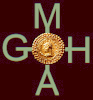
KINGDOM OF THRACE - SARATOKOS, CIRCA 410-380 BC - AR Trihemiobol, circa 410-380 BC
weight 0,82gr. ; silver Ø 11mm.
obv. Male head right with long haire (Saratokos ?)
rev. MΔ-monogram, around SARTOKO
The Tracian king Saratokos is only known from his coins.
Sear- ; BMC- ; SNG.Copenhagen- ; Jurukova 30-31 ; SNG.Tübingen- ;
Babelon, Traité IV, p.847, no.1297 ; Stancomb collection- ; Moushmov 5696 ;
Dewing- ; Tapalov (2005), no.66-67 ; Peter, page.99, no.2.4 RR
very attractive coin of early classical style
vf/xf |
|
| |
|

 |
KINGDOM OF THRACE - LYSIMACHOS, 305-281 BC - AR Tetradrachm, Ainos (ca.282-280 BC)
weight 17,13gr. ; silver Ø 30mm.
obv. Diademed head of the deified Alexander the Great right,
with horns of Ammon
rev. Athena Nikephoros enthroned left, holding Nikè in right hand and
resting left arm on shield, transverse spear in background, thymiaterion
above cult statue of Hermes Perpheraios set on throne in inner left field,
BAΣIΛEΩΣ on right, ΛYΣIMAXOY on left
Lysimachos was one of the more successful diadochi, largely keeping out of the wars between the other successors and adding Macedon and areas of Asia Minor to his territories. Perhaps one of his most notable achievements though is the legacy left by his beautiful coinage. Lysimachos took the bold and innovative step of showing the image of the now deified Alexander on his silver drachms, tetradrachms and gold staters. The intended message is clear; through association to the now godlike Alexander, Lysimachos′ legitimacy to rule is unquestionable !
The current understanding of this issue places it with a local Dynast, Skostokos as the issuer. A CNG comment on this type and mint follows:
While previous scholars viewed Skostokos as a dynast who took control of parts of Thrace following Lysimachos′ death, Fischer-Bossert′s die study demonstrates that Skostokos was most likely a local dynast of the environs around Ainos, who ruled under Lysimachos, and was permitted to strike Lysimachi beginning late in the king′s reign. Current scholarship suggests he ruled from circa 285/4-273/2 BC (see, e.g., E. Paunov, "Introduction to the Numismatics of Thrace" in J. Valeva, et al., A Companion to Ancient Thrace, p. 280, fig. 18.4). Skostokos apparently continued to strike Lysimachi in the chaotic period following the latter′s death, before Seleukid authority could be established in Thrace.
♦ Only a few examples known of this type. Extremely rare. ♦
Müller 118 ; Thompson - ; SNG.Copenhagen - ; Armenak - ;
SNG Berry 406 ; Weber- ; SNG.Delepierre- ; McClean- ;
Meydancikkale 2691 (Pl.79) ; cf. HGC 3, no.1750r RRR
attractive specimen, well centred, full flan,
of good style with wonderful portrait
xf- |
|
| |
|

 |
KINGDOM OF THRACE - LYSIMACHOS, 305-281 BC - MACEDONIA - AR Tetradrachm, probably Amphipolis, circa 288-281 BC
weight 17,17gr. ; silver Ø 30mm.
obv. Diademed head of Alexander the Great right, wearing horns of Ammon
rev. Athena enthroned left, holding Nikè and resting left arm ons hield ;
on right BAΣIΛEΩΣ, on left ΛYΣIMAXOY, monogram inner left
variety; the transverse spear, normally resting against her right side,
is missing on this coin. Very curious.
This coin is missing in the important reference literature. Extremely rare.
Müller- ; SNG.Copenhagen - ; Thompson- (cf. 200) RRR
Wonderful coin with attractive portrait of Alexander the Great.
xf- |
|
| |
|

 |
KINGDOM OF THRACE - LYSIMACHOS, 305-281 BC - AR Tetradrachm, unidentified mint (circa 297-281 BC)
weight 16,81gr. ; silver Ø 30mm.
obv. Diademed head of the deified Alexander the Great right,
with horns of Ammon
rev. Athena Nikephoros enthroned left, holding Nikè in right hand and
resting left arm on shield, transverse spear in background, ATIO-monogram
in inner left field, BAΣIΛEΩΣ on right, ΛYΣIMAXOY on left
Lysimachos was one of the more successful diadochi, largely keeping out of the wars between the other successors and adding Macedon and areas of Asia Minor to his territories. Perhaps one of his most notable achievements though is the legacy left by his beautiful coinage. Lysimachos took the bold and innovative step of showing the image of the now deified Alexander on his silver drachms, tetradrachms and gold staters. The intended message is clear; through association to the now godlike Alexander, Lysimachos′ legitimacy to rule is unquestionable !
♦ magnificent portrait, made by an artist die cutter ♦
Tetradrachms with this mintmark are unpublished in
the important reference literature. Extremely rare as such.
Müller- ; Thompson - ; SNG.Copenhagen- ; cf. SNG Berry 407 ;
cf. Meydancikkale 2705 ; cf. HGC 3, no.1750 RRR
very attractive specimen with excellent portrait
xf- à vf/xf |
|
| |
|

 |
KINGDOM OF THRACE - LYSIMACHOS, 305-281 BC - PROBABLY WESTERN ASIA MINOR - AR Tetradrachm, uncertain mint (circa 297-281 BC)
weight 16,76gr. ; silver Ø 29mm.
obv. Diademed head of the deified Alexander the Great right,
with horns of Ammon
rev. Athena Nikephoros enthroned left, holding Nikè in right hand and
resting left arm on shield, transverse spear in background, monogram
in inner left field, BAΣIΛEΩΣ on right, ΛYΣIMAXOY on left
This silver tetradrachm is of the Thracian king Lysimachos, who had served as one of Alexander the Great′s closest generals. Following the death of Alexander in 323 BC his vast empire was divided among his family and most loyal generals, the so called diadochi. Lysimachos was one of the more successful diadochi, largely keeping out of the wars between the other successors and adding Macedon and areas of Asia Minor to his territories. Perhaps one of his most notable achievements though is the legacy left by his beautiful coinage. Lysimachos took the bold and innovative step of showing the image of the now deified Alexander on his silver drachms, tetradrachms and gold staters. The intended message is clear; through association to the now godlike Alexander, Lysimachos′ legitimacy to rule is unquestionable !
The silver denominations (tetradrachms and drachms) featured not the head of Lysimachos but rather Alexander in deified form – an homage to a fallen leader. On the obverse, Alexander is depicted adorned with a ram′s horn, alluding to the Egyptian deity Amun, whom the Greeks–and later the Romans–incorporated into their mythos attributed to Zeus and Jupiter, respectively. On the reverse is a seated Athena who holds a crowning figure of Nike, all while resting her elbow upon a shield and with a spear cradled behind her. Just like Alexander′s massive output at countless mints, the determination of the striking locale relies heavily upon the various control marks, symbols, and/or monograms, placed around the reverse.
Tetradrachms with this monogram are unpublished in
the important reference literature. Extremely rare as such.
Müller - ; Thompson - ; SNG.Copenhagen - ; Weber- ;
SNG.Delepierre- ; McClean- ; cf. HGC 3, no.1750 RRR
vf |
|
| |
|

 |
KINGDOM OF THRACE - LYSIMACHOS, 305-281 BC - AR Tetradrachm, unidentified mint (circa 297-281 BC)
weight 16,49gr. ; silver Ø 28mm.
obv. Diademed head of the deified Alexander the Great right,
with horns of Ammon
rev. Athena Nikephoros enthroned left, holding Nikè in right hand and
resting left arm on shield, transverse spear in background, ΛO-monogram
in inner left field, BAΣIΛEΩΣ on right, ΛYΣIMAXOY on left
Lysimachos was one of the more successful diadochi, largely keeping out of the wars between the other successors and adding Macedon and areas of Asia Minor to his territories. Perhaps one of his most notable achievements though is the legacy left by his beautiful coinage. Lysimachos took the bold and innovative step of showing the image of the now deified Alexander on his silver drachms, tetradrachms and gold staters. The intended message is clear; through association to the now godlike Alexander, Lysimachos′ legitimacy to rule is unquestionable !
Tetradrachms with this mintmark are unpublished in
the important reference literature. Extremely rare as such.
Müller- ; Thompson - ; SNG.Copenhagen- RRR
attractive specimen with wonderful portrait
vf/xf à vf+ |
|
| |
|

 |
KINGDOM OF THRACE - LYSIMACHOS, 305-281 BC - TROAS - AR Tetradrachm, probably Alexandria Troas, circa 297-282 BC
weight 17,07gr. ; silver Ø 30mm.
obv. Diademed head of the deified Alexander right, wearing horn of Ammon
rev. Athena enthroned left, holfing Nike in her outstretched right hand and
resting left elbow on a shield to her side, behind which rests a spear;
ΠY-monogram in inner left field, round shield with A in exergue;
on right BAΣIΛEΩΣ, on left ΛYΣIMAXOY
Lysimachos was one of the more successful diadochi, largely keeping out of the wars between the other successors and adding Macedon and areas of Asia Minor to his territories. Perhaps one of his most notable achievements though is the legacy left by his beautiful coinage. Lysimachos took the bold and innovative step of showing the image of the now deified Alexander on his silver drachms, tetradrachms and gold staters. The intended message is clear; through association to the now godlike Alexander, Lysimachos′ legitimacy to rule is unquestionable !
Müller- ; SNG.Copenhagen - ; Thompson- (cf. 145-146) ;
SNG.Delepierre- ; Weber collection- RRR
Minor flan failure on cheek, otherwise wonderful coin of the
finest style and with excellent details. Extremely rare.
xf |
|
| |
|

 |
KINGDOM OF THRACE - LYSIMACHOS, 305-281 BC - TROAS - AR Tetradrachm, Abydos (circa 297-281 BC)
weight 17,11gr. ; silver Ø 29mm.
obv. Diademed head of Alexander the Great right, wearing horns of Ammon
rev. Athena enthroned left, holding Nikè and resting left arm on shield,
transverse spear resting against her right side, BAΣIΛEΩΣ to right,
ΛYΣIMAXOY to left, eagle standing right inner left
Lysimachos was one of the more successful diadochi, largely keeping out of the wars between the other successors and adding Macedon and areas of Asia Minor to his territories. Perhaps one of his most notable achievements though is the legacy left by his beautiful coinage. Lysimachos took the bold and innovative step of showing the image of the now deified Alexander on his silver drachms, tetradrachms and gold staters. The intended message is clear; through association to the now godlike Alexander, Lysimachos′ legitimacy to rule is unquestionable !
The standing eagle was the mint mark of Abydos, and is typical for its city coinage from the 5th century BC until the 2nd century BC. For that reason Abydos is the most likely mint for this coin type. In 302 BC, during the Fourth War of the Diadochi, Lysimachos crossed over into Asia Minor and invaded the kingdom of Antigonus I. Unlike the neighbouring cities of Parion and Lampsakos which surrendered, Abydos resisted Lysimachus and was besieged. Lysimachus was forced to abandon the siege, however, after the arrival of a relief force sent by Demetrius, son of King Antigonus I.
provenance; Ex Button, April 1966, Nr. 576
Amazing portrait of the deified Alexander the Great. Excellent style. Very rare.
Müller 342 ; Thompson - ; Boston MfA 839 ; Seyrig, Parion, Pl. 42b RR
good xf |
|
| |
|

 |
KINGDOM OF THRACE - LYSIMACHOS, 305-281 BC - IONIA - AR Tetradrachm, Magnesia (circa 297-282 BC)
weight 16,89gr. ; silver Ø 28mm.
obv. Diademed head of deified Alexander the Great right,
with the horn of Ammon, within dotted circle
rev. Athena Nikephoros enthroned left, holding Nikè in right hand and resting
her left arm on shield, transverse spear resting against her right side, BAΣIΛEΩΣ
to right, ΛYΣIMAXOY to left, racetorch with fillets inner left, maeander pattern in exergue
This outstanding silver tetradrachm is of the Thracian king Lysimachos, who had served as one of Alexander the Great′s closest generals. Following the death of Alexander in 323 BC his vast empire was divided among his family and most loyal generals, the so called diadochi. Lysimachos was one of the more successful diadochi, largely keeping out of the wars between the other successors and adding Macedon and areas of Asia Minor to his territories. Perhaps one of his most notable achievements though is the legacy left by his beautiful coinage. Lysimachos took the bold and innovative step of showing the image of the now deified Alexander on his silver drachms, tetradrachms and gold staters. The intended message is clear; through association to the now godlike Alexander, Lysimachos′ legitimacy to rule is unquestionable !
The silver denominations (tetradrachms and drachms) featured not the head of Lysimachos but rather Alexander in deified form – an homage to a fallen leader. On the obverse, Alexander is depicted adorned with a ram′s horn, alluding to the Egyptian deity Amun, whom the Greeks–and later the Romans–incorporated into their mythos attributed to Zeus and Jupiter, respectively. On the reverse is a seated Athena who holds a crowning figure of Nike, all while resting her elbow upon a shield and with a spear cradled behind her. Just like Alexander′s massive output at countless mints, the determination of the striking locale relies heavily upon the various control marks, symbols, and/or monograms, placed around the reverse.
Coinage at Magnesia seems to have been more or less continuous from 301 to 282 BC., when the city fell to Seleukos. In 287 BC the Magnesians apparently supported Demetrios Poliorketes but Lysimachos did not close the royal mint after the rebellious city had been recaptured in 286 BC. A few of the thirty-three obverse dies known for tetradrachms are of the late style associated with the period between 286 and 281 BC.
Müller - (cf. 444) ; Thompson 110 ; SNG.Copenhagen - (cf. 1108) ;
SNG.Delepierre- (cf. 845) ; Weber - ; McClean- RR
Very attractive example of a wonderful style.
Very strong portrait of Alexander the Great. Very rare.
vf/xf |
|
| |
|

 |
KINGDOM OF THRACE - LYSIMACHOS, 305-281 BC - IONIA - AR Tetradrachm, Smyrna (287-281 BC)
weight 16,64gr. ; silver Ø 28mm.
obv. Diademed head of the deified Alexander the Great right,
with horns of Ammon
rev. Athena Nikephoros enthroned left, holding Nikè in right hand and
resting left arm on shield, transverse spear in background, turred head
of Tyche at inner left field, F at outer left field, BAΣIΛEΩΣ on right,
ΛYΣIMAXOY on left
Lysimachos was one of the more successful diadochi, largely keeping out of the wars between the other successors and adding Macedon and areas of Asia Minor to his territories. Perhaps one of his most notable achievements though is the legacy left by his beautiful coinage. Lysimachos took the bold and innovative step of showing the image of the now deified Alexander on his silver drachms, tetradrachms and gold staters. The intended message is clear; through association to the now godlike Alexander, Lysimachos′ legitimacy to rule is unquestionable !
Smyrna was an Ancient Greek city located at a strategic point on the Aegean coast of Anatolia, Turkey. Due to its advantageous port conditions, its ease of defence, and its good inland connections, Smyrna rose to prominence. Since about 1930, the city′s name has been İzmir.
Two sites of the ancient city are today within İzmir′s boundaries. The first, probably founded by indigenous peoples, rose to prominence during the Archaic Period as one of the principal ancient Greek settlements in western Anatolia. The second, whose foundation is associated with Alexander the Great, reached metropolitan proportions during the period of the Roman Empire. Most of the ancient city′s present-day remains date to the Roman era, the majority from after a 2nd-century AD earthquake. In practical terms, a distinction is often made between these.
Old Smyrna was the initial settlement founded around the 11th century BC, first as an Aeolian settlement, and later taken over and developed during the Archaic Period by the Ionians. Smyrna proper was the new city to which residents moved as of the 4th century BC. Alexander the Great conceived the idea of restoring the Greek city in a scheme that was, according to Strabo, actually carried out under Antigonus (316–301 BC) and Lysimachus (301-281 BC), who enlarged and fortified the city. The ruined acropolis of the ancient city, the "crown of Smyrna", had been on a steep peak about 380 metres (1,250 ft) high, which overhangs the northeast extremity of the gulf. Modern İzmir was constructed atop the later Hellenistic city, partly on the slopes of a rounded hill the Greeks called Pagos near the southeast end of the gulf, and partly on the low ground between the hill and the sea. The beauty of the Hellenistic city, clustering on the low ground and rising tier over tier on the hillside, was frequently praised by the ancients and is celebrated on its coins.The coinage mainly took place from the 2nd century BC, that is, at the time of the "new" Smyrna, which was founded at the time of the Macedonian general Antigonus I Monophthalmos at the end of the 4th century BC.
Only a small emission of tetradrachms and drachms from the city of Smyrna was issued. This was likely to celebrate the city′s restoration. It remained a single emission. Thompson recorded only eight tetradrachms worldwide, all from the same obverse die. They were completely absent from the major Armenak find. Extremely rare.
Müller- ; Thompson 236 ; SNG.Copenhagen- ;
cf. HGC 3, no.1750o RRR
attractive specimen with appealing tone
vf |
|
| |
|
|
| |
|

 |
KINGDOM OF THRACE - SKOSTOKOS, LOCAL TRACIAN DYNAST, CIRCA 295-281 BC - TRACIA - AR Tetradrachm, uncertain mint in Tracia, circa 285-281
weight 16,59gr. ; silver Ø 28mm.
obv. Diademed head of the deified Alexander right, wearing horn of Ammon
rev. Athena Nikephoros enthroned left, holfing Nike in her outstretched right hand and
resting left elbow on a shield to her side, behind which rests a transverse spear;
herm to inner left, monogram in exergue; on right BAΣIΛEΩΣ,
on left ΛYΣIMAXOY, below ΣKOΣTOKOY
While previous scholars viewed Skostokos as a dynast who took control of parts of Thrace following Lysimachos′ death, Fischer-Bossert′s die study demonstrates that Skostokos was most likely a local ruler, under Lysimachos, who was permitted to strike these coins near the end of Lysimachos′ reign. This particular coin was struck from the first reverse die to add Skostokos′ name.
SNG Ashmolean 3779 ; Youroukova 103 ; Dewing 1362 ; Nanteuil 743 ;
Sartiges 177 ; Bement 901 ; SNG.Copenhagen 1171; W. Fischer-Bossert,
Die Lysimacheier des Skostokos, Revue Belge de Numismatique 151, 2005, no.26
(cf. Triton XIX, lot 81 in vf+; USD 3.250 + 18%) RR
Some minor scratches. Attractive tone. Very rare.
vf+/xf- |
|
| |
|

 |
KINGDOM OF THRACE - MOSTIS, CA.139-101 BC - AR Tetradrachm, Regnal Year 37 (ca.103/102 BC), probably Byzantion
weight 16,00gr. ; silver Ø 31mm.
obv. Draped and diademed bust of Mostis right.
rev. Athena wearing helmet chiton and peplos, seated left on throne,
against which leans shield; she holds in her right hand Nike left,
crowning king′s name; her left hand rests on seat; monogramm over
her knees in left field; ΒΑΣΙΛΕΩΣ to right, ΜΟΣΤΙΔΟΣ to left,
ΕΠΙ ΣΑΔΑΛΟΥ / ΕΤΟΥΣ ΛH (off flan) in exergue
Mostis is thought to have been a king of the Kainian Thacians, who inhabited the northern Propontic coast. He emerged on the political scene after the death of Ziselmius, probably circa 139 BC. Based on hoard evidence, it has been suggested that his reign was brought to an end by the conquest of Kainian territory by the Roman preator Titus Didius in 101/100 BC. The lands of the Kainian Thracians were subsequently reorganized as part of a new eparchy (district) of Kainika and the Chersonesos and attached to the Roman province of Macedonia.
He is best known from his coins, bronze and silver, and from epigraphical evidence. Mostis coinage include bronze coins and rare tetradrachms. On the obverse of these tetradrachms the king is depicted with his draped bust. The reverse is clearly derived from the earlier Lysimachos tetradrachms and shows us a throned Athena Nikephoros. The tetradrachms are commonly attributed to the mint of Byzantion, while bronze coinage probably took place in Bisanthe of even Parion across the Propontis in Mysia.
In 2012 a coin hoard containing Mostis tetradrachms was discovered in regular archaeological research in village of Sinemorets, by Bulgarian archaeologist Ms Daniela Agre.Tetradrachms of Mostis can be seen in museums in London, Berlin, Paris. Coins from Sinemorets hoard (2012) are in Tsarevo museum (Bulgaria).
cf. HGC 3.2, page 209, 1727 var. ; Peykov C4500 RR
Minor traces of oxidation. Attractive toning. Very rare.
vf/vf+ |
|
| |
|