|

 |
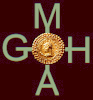
PELOPONNESOS, SIKYON - AR Stater, 431-400 BC
weight 11,98gr. ; silver Ø 22mm.
obv. Chimaera moving to right on ground line, ΣE below Chimaera
rev. Dove flying right with wings open above and below,
letter A behind, letter E in front, áll within olive-wreath
Sikyon was an ancient Greek city state situated in the northern Peloponnesus between Corinth and Achaea on the territory of the present-day regional unit of Corinthia. It was built on a low triangular plateau about 3 kilometres (two miles) from the Corinthian Gulf. Between the city and its port lay a fertile plain with olive groves and orchards. An ancient monarchy at the times of the Trojan War, the city was ruled by a number of tyrants during the Archaic and Classical period and became a democracy in the 3rd century BC. Sicyon was celebrated for its contributions to ancient Greek art, producing many famous painters and sculptors. In Hellenistic times it was also the home of Aratus of Sicyon, the leader of the Achaean League.
The Chimera was, according to Greek mythology, a monstrous fire-breathing hybrid creature of Lycia in Asia Minor, composed of the parts of more than one animal. It is usually depicted as a lion, with the head of a goat arising from its back, and a tail that might end with a snake′s head, and was one of the offspring of Typhon and Echidna and a sibling of such monsters as Cerberus and the Lernaean Hydra.
cf. Künker Auktion 367, lot 7191 (in xf: € 15.000 + 25%)
note: the Künker piece is much more common than the piece offered here.
SNG.Copenhagen - ( cf. 32) ; BCD 197.4 ; McClean - (cf. 6239) ;
BMC - ; Weber Collection - (cf. 3903) ; SNG.Delepierre - (cf. 1939) ;
Pozzi collection 4063 ; Babelon, Traité III, 776 ; Sear - (cf. 2763) ;
HGC 5, 186 RR
A very rare and attractive coin.
vf+ |
|
| |
|

 |
PELOPONNESOS, SIKYON - AR Stater, circa 335-300 BC
weight 12,23gr. ; silver Ø 23mm.
obv. Chimaera moving to left on ground line, right paw raised,
below Chimaera ΣE, above to right wreath
rev. Dove flying left with wings open above and below,
letter N below dove′s head, all within olive-wreath tied on the right
and with the branch ends entwined on the left
Sikyon was an ancient Greek city state situated in the northern Peloponnesus between Corinth and Achaea on the territory of the present-day regional unit of Corinthia. It was built on a low triangular plateau about 3 kilometres (two miles) from the Corinthian Gulf. Between the city and its port lay a fertile plain with olive groves and orchards. An ancient monarchy at the times of the Trojan War, the city was ruled by a number of tyrants during the Archaic and Classical period and became a democracy in the 3rd century BC. Sikyon was celebrated for its contributions to ancient Greek art, producing many famous painters and sculptors. In Hellenistic times it was also the home of Aratus of Sikyon, the leader of the Achaean League.
The Chimera was, according to Greek mythology, a monstrous fire-breathing hybrid creature of Lycia in Asia Minor, composed of the parts of more than one animal. It is usually depicted as a lion, with the head of a goat arising from its back, and a tail that might end with a snake′s head, and was one of the offspring of Typhon and Echidna and a sibling of such monsters as Cerberus and the Lernaean Hydra.
BMC 57 ; SNG.Copenhagen 48 ; Sear - (cf. 2771) ;
BCD 218 (in xf with minor marks SFR 6.000 + 15%) ; McClean - ;
Weber Collection - (cf. 3904) ; SNG.Delepierre - (cf. 1944) ;
Pozzi collection 4061 ; Babelon, Traité III, 776 ; HGC 5, 201 R
Minor flatness of strike. Very attractive tone.
vf/xf à xf- |
|
| |
|

 |
PELOPONNESOS, SIKYON - AR Triobol or hemidrachm, circa 330-280 BC
weight 2,45gr. ; silver Ø 16mm.
obv. Chimaera moving to left on ground line, right paw raised,
below Chimaera ΣE
rev. Dove flying left with wings open above and below,
NO above dove′s tail, all within olive-wreath tied on the right
and with the branch ends entwined on the left
The Chimera was, according to Greek mythology, a monstrous fire-breathing hybrid creature of Lycia in Asia Minor, composed of the parts of more than one animal. It is usually depicted as a lion, with the head of a goat arising from its back, and a tail that might end with a snake′s head, and was one of the offspring of Typhon and Echidna and a sibling of such monsters as Cerberus and the Lernaean Hydra.
BMC 72 ; SNG.Copenhagen 59 ; Sear - (cf. 2774) ;
BCD 301.1 ; McClean 6269var. ; Weber Collection 3914var. ;
SNG.Delepierre 1956 ; Jameson - ; Pozzi collection - (cf. 4074) ;
Babelon, Traité III, 803 ; HGC 5, 213
f/vf |
|
| |
|

 |
PELOPONNESOS, SIKYON - AE Dichalkos or Attic Tetartemorion, circa 303 BC
weight 2,93gr. ; bronze Ø 14mm.
obv. Dove flying left with wings open above and below
rev. ΔH in olive wreath
After the death of Alexander the Great in 323 BC, Sikyon was controlled by Alexander, son of the Macedonian regent Polyperchon, and then by Kassander, who deposed Polyperchon in 314 BC. The city was betrayed by Ptolemaios I Soter of Egypt in 308 BC, but fell to the Macedonian king, Demetrios Poliorketes, in 303 BC. It is suggested that ΔH on the reverse does not refers to a magistrate, but to king Demetrios.
BMC 159 ; SNG.Copenhagen 84 ; Sear - (cf. 2781) ;
BCD 315.3 ; McClean - ; Weber Collection 3927 ;
Historia Numorum p. 410 ; SNG.Delepierre - ; HGC 5, 257 R
Minor traces of oxidation. Rare.
vf- à f/vf |
|
| |
|