|

 |
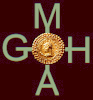
ARABIA FELIX - KINGDOM OF SABA - SABAEAN DYNASTY, CIRCA 1200-275 BC - AE Unit or drachm, 3rd century BC
weight 5,36gr. ; silver Ø 15mm.
obv. Head of Athena right, wearing crested helmet ornameneted
with olive-leaves ; on cheek Sabaean letter ″N″
rev. Owl standing right, head facing, olive spray and crescent in
upper field to left, AΘE to right
The Sabaeans were an ancient people speaking an Old South Arabian language who lived in the southern Arabian Peninsula.The origin of the Sabaean Kingdom is uncertain. It ′s origin goes back circa 1200 BC, but it began to flourish from the eighth century BC onward. The Sabaeans, like the other Yemenite kingdoms of the same period, were involved in the extremely lucrative spice trade, especially frankincense and myrrh. The kingdom of Saba has been identified with the biblical land of Sheba. However, the view that the biblical kingdom of Sheba was the ancient Semitic civilization of Saba in Southern Arabia is controversial: there is no archaeological evidence for the story of Solomon and the "Queen of Sheba" and it seems to be non-historical made up story by biblical authors to legitimize the participation of Judah in the lucrative Arabian trade. Round 275 BC the Kingdom fell after a long but sporadic civil war between several Yemenite dynasties claiming kingship; from this the late Himyarite Kingdom arose as victors.
For Saba, trade with the Greek world conducted mostly through the Mediterranean post of Gaza. The earliest coins in the region were Athenian tetradrachms of the fifth century BC. Produced in vast numbers, these ″owls″ became widely accepted in trade across much of the ancient world because the silver they contained was relatively pure. This made the Athenian tetradrachm familiar to the people of southern Arabia. Arabia, like Egypt, had no silver mines, so silver was an exotic import. Rulers of Saba in central Yemen, with its capital at Marib, soon realized that they could enhance their prestige and wealth by producing their own imitations of this coinage. So ,the first coins of the Sabaean kingdom were copies of the ″owls″ of Athens. The 17.2 gram tetradrachm was inconveniently large, so for centuries, South Arabian silver coins were based on a local unit of about 5.5 grams, with fractional denominations of a half, a quarter, an eighth and even a tiny 16th. As generations of die engravers made copies of copies, the designs deteriorated, so that the obverse head of Athena and the reverse owl become increasingly scraggly and schematic. A feature of this coinage is a prominent South Arabian letter on Athena′s cheek as a mark of denomination: ″N″ for the unit or drachm, ″K″ for rare double units (didrachm), ″G″ for the half (hemidrachm), ″T″ for the quarter, and ″S″ for the eighth.
BMC 28, page 45-46 no.1-8 ; SNG.ANS.1455 ; Knapp 19A ;
Tamenako 1 ; Munro Hay-1.1ai ; Sear 6112 ; Huth 160 ;
HGC 10, no.720 R
vf |
|
| |
|

 |
ARABIA FELIX - HIMYARITE KINGDOM - AMDAN BAYYIN, circa 100-120 AD - AR ¼ Unit (Hemidrachm or quinarius ?), Raidan
weight 1,70gr. ; silver Ø 15mm.
obv. Beardless male head right, hair in ringlets, surrounded by
a penannular tore with knob et one end, symbol above head
rev. Small beardless male head right, hair in ringlets, monogram in front and behind,
surrounded by Himyarite legend
The Hymarite Kingdom was a kingdom in ancient Yemen. Established in 110 BC, it took as its capital the ancient city of Zafar, to be followed at the beginning of the 4th century by what is the modern-day city of Sana′a. The kingdom conquered neighbouring Saba′ (Sheba) in circa 25 BC, Qataban in circa 200 AD, and Haḍramaut circa 300 AD. Its economy was based on agriculture, and foreign trade centered on the export of frankincense and myrrh. For many years, the kingdom was also the major intermediary linking East Africa and the Mediterranean world. This trade largely consisted of exporting ivory from Africa to be sold in the Roman Empire. Ships from Ḥimyar regularly travelled the East African coast, and the state also exerted a large amount of Influence both cultural, religious and political over the trading cities of East Africa whilst the cities of East Africa remained independent. Its political fortunes relative to Saba′ changed frequently until it finally conquered the Sabaean Kingdom around 280 AD. Himyar then endured until it finally fell to invaders from the Kingdom of Aksum in 525 AD.
cf. BMC 28, page 70,1 ; cf. SNG.ANS 1595 ;
cf. Huth 438 ; cf. Mitchiner ACW.373 ;
cf. Sear GIC.5717
xf- |
|
| |
|