|

 |
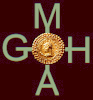
PHOENICIA, ARADOS (ARWAD) - AR 1/3 Shekel of tetrobol, circa 380-350 BC
weight 3,30gr. ; silver Ø 15mm.
large, thin planchet (= BMC 27-36)
obv. Laureate and bearded head of Ba′al-Arwad (Lord of Arwad) right
rev. Phoenician bireme (war galley) right above waves, figure
of Pataikos right on prow, row of shield on bulwalk. Phoenician
letters ″Mem Aleph″ (= Melech Arwad = King of Arwad) above
Early coins of Arwad (Greek; Arados) have the Aramaic letters mem aleph (read from right to left) above the galley, abbreviating Melech Arad (meaning King of Arwad), sometimes followed by the king′s initial, and sometimes by the Phoenician regnal year date.
The Phoenicians, a Semetic people, developed remarkable proficiency in shipbuilding, seafaring and trade, as the prophet Ezekiel (lived circa 622 – 570 BC) observed. Phoenicians invented the alphabet, which their Greek neighbours and trading partners adopted and transmitted to us. In turn, they acquired the idea of coinage from the Greeks, and the coins of the half-dozen Phoenician city-states give us a window into their history and beliefs. Like so many things in ancient numismatics, the date and identity of the first Phoenician coins are uncertain. The earliest date generally accepted by scholars is about 450 BC. Initially, the coins were all silver–from distant mines in Spain and possibly Sardinia–with weights based on variations of the Babylonian shekel of 7.2 grams. Very small fractions were issued, down to 1/24 shekel (about half a gram, and 10 mm in diameter).
Test cut on obverse ; ancients people would sometimes chisel (test cut) a coin to determine if the coin was a good, official, solid silver or gold coin, or if it was a fourree, a plated counterfeit.
BMC 27-36 & 37-44 ; SNG.Copenhagen 17 ; Fitzwilliam 5992 ;
Weber collection 8010 ; McClean 9445 ; Betlyon 86, 11-12 ;
Babelon, Achéménides 129, 886 (Pl. XXII, 16) ; Sear 5972 ;
Mitchiner ATAEC- (vgl.1265) ; HGC 10, no.40 R
Attractive specimen with nice toning. Rare.
vf |
|
| |
|

 |
PHOENICIA, ARADOS (ARWAD) - AR 1/3 Shekel of tetrobol, circa 380-350 BC
weight 2,84gr. ; silver Ø 11mm.
small, thick planchet (= BMC 37-44)
obv. Laureate and bearded head of Ba′al-Arwad (Lord of Arwad) right
rev. Phoenician bireme (war galley) right above waves, figure
of Pataikos right on prow, row of shield on bulwalk. Phoenician
letters ″Mem Aleph″ (= Melech Arwad = King of Arwad) above
Early coins of Arwad (Greek; Arados) have the Aramaic letters mem aleph (read from right to left) above the galley, abbreviating Melech Arad (meaning King of Arwad), sometimes followed by the king′s initial, and sometimes by the Phoenician regnal year date.
The Phoenicians, a Semetic people, developed remarkable proficiency in shipbuilding, seafaring and trade, as the prophet Ezekiel (lived circa 622 – 570 BC) observed. Phoenicians invented the alphabet, which their Greek neighbours and trading partners adopted and transmitted to us. In turn, they acquired the idea of coinage from the Greeks, and the coins of the half-dozen Phoenician city-states give us a window into their history and beliefs. Like so many things in ancient numismatics, the date and identity of the first Phoenician coins are uncertain. The earliest date generally accepted by scholars is about 450 BC. Initially, the coins were all silver–from distant mines in Spain and possibly Sardinia–with weights based on variations of the Babylonian shekel of 7.2 grams. Very small fractions were issued, down to 1/24 shekel (about half a gram, and 10 mm in diameter).
BMC 27-36 & 37-44 ; SNG.Copenhagen 17 ; Fitzwilliam 5992 ;
Weber collection 8010 ; McClean 9445 ; Betlyon 86, 11-12 ;
Babelon, Achéménides 129, 886 (Pl. XXII, 16) ; Sear 5972 ;
Mitchiner ATAEC- (vgl.1265) ; HGC 10, no.40 R
a rare coin type
f/vf |
|
| |
|

 |
PHOENICIA, ARADOS (ARWAD) - AR 1/12 Shekel of obol, circa 380-350 BC
weight 0,71gr. ; silver Ø circa 8mm.
obv. Laureate and bearded head of Ba′al-Arwad (Lord of Arwad) right
rev. Phoenician bireme (war galley) right above waves, figure
of Pataikos right on prow, row of shield on bulwalk. Phoenician letters
“Mem Aleph” (= Melech Arwad = King of Arwad) above.
Early coins of Arwad (Greek: Arados) have the Aramaic letters mem aleph (read from right to left) above the galley, abbreviating Melech Arwad (meaning King of Arwad), sometimes followed by the king′s initial, and sometimes by the Phoenician regnal year date.
The Phoenicians, a Semetic people, developed remarkable proficiency in shipbuilding, seafaring and trade, as the prophet Ezekiel (lived circa 622 – 570 BC) observed. Phoenicians invented the alphabet, which their Greek neighbours and trading partners adopted and transmitted to us. In turn, they acquired the idea of coinage from the Greeks, and the coins of the half-dozen Phoenician city-states give us a window into their history and beliefs. Like so many things in ancient numismatics, the date and identity of the first Phoenician coins are uncertain. The earliest date generally accepted by scholars is about 450 BC. Initially, the coins were all silver–from distant mines in Spain and possibly Sardinia–with weights based on variations of the Babylonian shekel of 7.2 grams. Very small fractions were issued, down to 1/24 shekel (about half a gram, and 10 mm in diameter).
BMC 45 ; SNG.Copenhagen 19 ; Mitchiner ACW.136 ;
Winterthur 1029/1030 ; Weber collection 8011 ; Sear 5973 ;
Babelon, Achéménides 129, 894 (Pl. XXII, 19) ; Slg.Klein 704 ;
McClean - ; Mitchiner ATAEC 1266 ; HGC 10, no.46 ; Betlyon 86, 13
minor flan crack, attractive toning
f/vf à vf- |
|
| |
|

 |
PHOENICIA, ARADOS (ARWAD) - GER′ ASHTART (GEROSTRATOS), 339-333 BC - AR Shekel, regnal year 15, circa 335 BC
weight 10,29gr. ; silver Ø circa 20mm.
obv. Laureate and bearded head of Ba′al-Arwad (Lord of Arwad) right
rev. Phoenician bireme (war galley) right on three lines of waves, figure
of Pataikos right on prow, row of shield on bulwalk. Phoenician letters
“Mem Aleph” (= Melech Arwad = King of Arwad) and numeral LIIIII (= 15) above
Early coins of Arwad (Greek; Arados) have the Aramaic letters mem aleph (read from right to left) above the galley, abbreviating Melech Arwad (meaning King of Arwad), sometimes followed by the king′s initial, and sometimes by the Phoenician regnal year date.
Arados (modern Arwad, Syria) is located on an island about 2 miles off the eastern Mediterranean coast. Although not as large as its fellow Phoenician cities Sidon and Tyre, it has an equally long history. It was captured by the Egyptian pharaoh Thutmose III in 1472 BC, and is mentioned in the campaign records of Ramesses II; it is also mentioned in the Biblical books of Genesis and Ezekiel. Like the rest of Phoenicia, it was subject to the Achaemenid Persians, and it formed a loose league with Sidon and Tyre. It began issuing coins in the late fifth century. Arados submitted to Alexander the Great without a fight, and even sent ships to help him conquer Tyre. (So much for their alliance.) The city continued to be of some importance through Seleucid and Roman times, but has declined since then.
The Phoenicians, a Semetic people, developed remarkable proficiency in shipbuilding, seafaring and trade, as the prophet Ezekiel (lived circa 622 – 570 BC) observed. Phoenicians invented the alphabet, which their Greek neighbours and trading partners adopted and transmitted to us. In turn, they acquired the idea of coinage from the Greeks, and the coins of the half-dozen Phoenician city-states give us a window into their history and beliefs. Like so many things in ancient numismatics, the date and identity of the first Phoenician coins are uncertain. The earliest date generally accepted by scholars is about 450 BC. Initially, the coins were all silver–from distant mines in Spain and possibly Sardinia–with weights based on variations of the Babylonian shekel of 7.2 grams. Very small fractions were issued, down to 1/24 shekel (about half a gram, and 10 mm in diameter).
BMC 68 ; SNG.Copenhagen - (cf. 23) ; cf. Mitchiner ATAEC 1270 (= jr.18)
(cf. Künker Auktion 365, lot 5155 in xf: 5.000 + 25%)
Usual irregular flan, but exceptional nice and well-struck for type. Rare.
vf/xf à xf- |
|
| |
|

 |
PHOENICIA, ARADOS (ARWAD) - AR Tetradrachme, year 200 (= 60/59 BC)
weight 15,39gr. ; silver Ø 27mm.
Aradian standard
obv. Turreted, veiled, and draped bust of Tyche right
rev. Nikè standing half-left, holding aphlastron and palm,
APAΔIΩN in right field, date and control letters in left field,
all within wreath
BMC- (cf. 289) ; HGC 10, no.72 ; SNG Copenhagen - (cf. 57) ;
cf. Sear 5992 ; Duyrat 4207 (this specimen noted) R
Very attractive specimen with good details. Rare.
xf- |
|
| |
|
|
| |
|
|
| |
|

 |
PHOENICIA, BYBLOS - KING OZBA’AL, CIRCA 400-376 BC - AR Shekel
weight 13,23gr. ; silver Ø 23mm.
obv. Phoenician bireme (war galley) left with lion′s head prow ornament,
three hoplites with round shields within; zigzag row of waves below,
hippocamp left and Phoenician letters "N O", a murex shell below
rev. Bull kneeling left, attacked by lion left on his back ; in field Phoenician
legend ″ozb′al mlk gbl″ (= Ozba’al melik gebal = Ozba’al king of Gebal)
BMC 4 ; SNG.Copenhagen 132 ; Mitchiner ACW.137 ; HGC.10,133 ;
cf. Rouvier 640 ; Betlyon 14 ; Mitchiner ATAEC 1273 ; Dewing 2662 ;
SNG.Fitzwilliam 6028-6029 ; HGC 10, no.133 R
Some flatness near edge, otherwise very attractive specimen
with fine details. Rare.
vf/xf |
|
| |
|

 |
PHOENICIA, MARATHOS - AR Drachm, circa 230-220 BC
weight 3,90gr. ; silver Ø 18mm.
Struck in name of Alexander III the Great (336-323 BC)
obv. Head of Athena with Corinthian helmet to right
rev. Nikè advancing left, holding wreath and stylus,
AΛEΞANΔPOY to right, monogram of ΜΑΡΑΘ to left
This rather extraordinary drachm was struck by the Phoenician city of Marathos (the monogram identifies the city) in the 220s BC, but in name of Alexander III the Great of Macedon and with the types of his gold staters. The reasons behind this exceptional issue are unknown but it must have been very short-lived since it is extremely rare today. Until recently, only two specimens were known; one in the de Luynes collection in Paris, and one described by Houghton. BMC, De Luynes, Rouvier and Babelon all refer to the single specimen known at that time. The number of known specimens can still be counted on one hand. The recent discovery of this type among a group of coins of Seleukos II suggest an issue date between 230 and 220 BC. It is possible that these drachms may have served as the contemporary fractional coinage to the extremely rare tetradrachm issues of Marathos, which date to the same period (cf. BMC p.119, 1). The tetradrachms were struck with the city’s ethnic, though, so there may be no association between the two denominations. The fact that these drachms are struck in the name of Alexander and employ his gold stater types may hold the key, but at present the circumstances of issue remain a mystery. Highly interesting historical coin and extremely rare.
Marathos (Amrit) was an ancient Phoenician city located near modern Tartus in Syria. The city was probably founded by the Arvadites (inhabitents of Arados) in the third millennium BC and served as their continental base. It grew to be one of the wealthiest towns in the dominion of Arados. The city surrendered, along with Arados, to Alexander the Great in 333 BC. During Seleucid times the town, known as Marathos, was probably larger and more prosperous than Arados. In 219 BC Marathos gained independence from Arados, and was later sacked by forces from the latter city in 148 BC and abandoned. The city′s Phoenician ruins have been preserved in their entirety without extensive remodeling by later generations.
BMC pl.XLII, A ; De Luynes 3164 ; Rouvier 781 ; Price- ;
Babelon, Persis 1439 ; Müller- ; Houghton 940 (attributed
to Alexander Balas in error) RRR
Some minor roughness. Attractive toning.
vf |
|
| |
|

 |
PHOENICIA, SIDON - BA′ ALSHILLEM, circa 407-372 BC - AR Dishekel
weight 27,45gr. ; silver Ø 28mm.
obv. War-galley travelling left, propelled by row of oars ;
shields along bulwarks, standard at stern, beneath lines of zig-zag waves,
above Phoenician letter ″B″
rev. Bearded deity , his right hand raised, standing in horsedrawn car,
slowly driven by charioteer ; behind the King of Sidon walking left,
holding animal-headed sceptre
Sidon was one of the two leading cities (with Tyre) of ancient Phoenicia. Sidon is located about 35 km. north of Tyre on the Mediterranean coast of modern Lebanon. History of the site goes back to the 4th millenium BC. The Kindom of Sidon started with Ba′al-hanunu I (1209-1197 BC) and ended with Ešmunšillah III (37-60 AD). Like Tyre, it was a commercial city and port for fleet of military ships and trading ships that went to all parts of the world of that time. The city was famous for the commercial exploitation of the purple (Murex). Sidon′s fortunes improved during the Persian period (539-332 BC). His coinage appears to have started in de second half of the fifth century BC and lasted until the Macedonian conquest in 332 BC. In 351 BC, on the enthronement of Artaxerxes III Ochus in Persia, Sidon revolted. King Tennes led Sidon in rebellion, but when the Persians reacted and the cause looked hopeless Tennes treacherously betrayed Sidon in order to save himself. The city was burned and, although rebuilt, did not regain its former position. Sidon quickly submitted to Alexander the Great in 332 BC and assisted him in the siege of Tyre. During the Hellenistic and Roman periods Sidon was a prosperous centre for commerce and learning.
The penteconter was an ancient Greek galley in use since the archaic period. In contrast to the ships of the Homeric poems, used to transport warriors to the battlefield, penteconters were designed to fight at sea. They had a heavy metal ram at the bow to pierce the hull of the enemy. Speed and maneuverability were key to their design. Naval historians reconstruct their design partly from written sources, from inscriptions, and from the visual arts. In present understanding, the fifty of the penteconter′s name refers to the number of oars on each side. They were arranged in two banks of twenty-five, one hundred oars in total. A midship mast with sail could also propel the ship under favorable wind. Penteconters were longer than merchant ships. They had a deck for carrying armored warriors (hoplite). According to some contemporary calculations, penteconters are believed to have been between 28 and 33 m long, approximately 4 m wide, and capable of reaching a top speed of 9 knots (17 km/h).
BMC 17-24 ; SNG.Copenhagen 194 ; Mitchiner ACW.132 ;
Elayi & Elayi 625 ; Betlyon 16-18 ; Rouvier 1096 ;
HGC 236 ; Sear 5934 R
Struck with worn reverse dies, but with an excellent fine detailed obverse
which shows us a beautiful Phoenician war galley. Rare historical coin.
vf+/vf- |
|
| |
|

 |
PHOENICIA, SIDON - BA′ALSHILLEM II, 401-366 BC - AR 1/16 Shekel, year 30 (= 371/0 BC)
weight 0,69gr. ; silver Ø 10mm.
obv. War-galley (Phoenician pentekonter) travelling left,
propelled by row of oars ; shields along bulwarks, standard
at stern, beneath lines of zig-zag waves, above Phoenician
letter ″B″ and regnal year ″30″
rev. Persian king (?) standing right, wearing crenellated
crown and slaying lion standing left, O between them
The penteconter was an ancient Greek galley in use since the archaic period. In contrast to the ships of the Homeric poems, used to transport warriors to the battlefield, penteconters were designed to fight at sea. They had a heavy metal ram at the bow to pierce the hull of the enemy. Speed and maneuverability were key to their design. Naval historians reconstruct their design partly from written sources, from inscriptions, and from the visual arts. In present understanding, the fifty of the penteconter′s name refers to the number of oars on each side. They were arranged in two banks of twenty-five, one hundred oars in total. A midship mast with sail could also propel the ship under favorable wind. Penteconters were longer than merchant ships. They had a deck for carrying armored warriors (hoplite). According to some contemporary calculations, penteconters are believed to have been between 28 and 33 m long, approximately 4 m wide, and capable of reaching a top speed of 9 knots (17 km/h).
BMC 36-44 ; SNG.Copenhagen 197-200 ; Mitchiner ATAEC 1280 ;
Elayi 2004, no.851-1218 ; HGC 10, no.240 ; Betlyon 27 ;
McClean 9492 ; Winterthur 1077 ; Weber - ; Sear 5936
f/vf
|
|
| |
|

 |
PHOENICIA, SIDON - BA′ALSHILLEM II, 401-366 BC - AR 1/16 Shekel, year 30 (= 371/0 BC)
weight 0,61gr. ; silver Ø 10mm.
obv. War-galley (Phoenician pentekonter) travelling left,
propelled by row of oars ; shields along bulwarks, standard
at stern, beneath lines of zig-zag waves, above Phoenician
letter ″B″ and regnal year ″30″ (off-flan)
rev. Persian king (?) standing right, wearing crenellated
crown and slaying lion standing left, O between them
BMC 36-44 ; SNG.Copenhagen 197-200 ; Mitchiner ATAEC 1280 ;
Elayi 2004, no.851-1218 ; HGC 10, no.240 ; Betlyon 27 ;
McClean 9492 ; Winterthur 1077 ; Weber - ; Sear 5936
obverse struck off-centre
f/f+ |
|
| |
|

 |
PHOENICIA, SIDON - BA′ALSHILLEM II, 401-366 BC - AR/AE 1/16 Shekel, year 30 ? (= 371/0 BC)
weight 0,54gr. ; silver Ø 8mm.
obv. War-galley travelling left, propelled by row of oars ;
shields along bulwarks, standard at stern, beneath lines of zig-zag waves,
above Phoenician letter ″B″ and regnal year ″30″ (unvisible/off flan)
rev. Persian king (?) standing right, wearing crenellated crown and
slaying lion, who is walking right, turning his back to the king and looks back
It concerns here a silver plated specimen (subaeratum) with a copper core. This could be a contemporary counterfeit. However, in times of war or silver shortages, official mints were also sometimes guilty of minting coins of inferior quality. Interesting and rare.
The penteconter was an ancient Greek galley in use since the archaic period. In contrast to the ships of the Homeric poems, used to transport warriors to the battlefield, penteconters were designed to fight at sea. They had a heavy metal ram at the bow to pierce the hull of the enemy. Speed and maneuverability were key to their design. Naval historians reconstruct their design partly from written sources, from inscriptions, and from the visual arts. In present understanding, the fifty of the penteconter′s name refers to the number of oars on each side. They were arranged in two banks of twenty-five, one hundred oars in total. A midship mast with sail could also propel the ship under favorable wind. Penteconters were longer than merchant ships. They had a deck for carrying armored warriors (hoplite). According to some contemporary calculations, penteconters are believed to have been between 28 and 33 m long, approximately 4 m wide, and capable of reaching a top speed of 9 knots (17 km/h).
cf. BMC 36-45 ; SNG.Copenhagen 196var. ; cf. McClean 9492 ;
cf. Elayi 2004, no.804-850 ; cf. HGC 10, no.238-239 ; cf. Betlyon 20 ;
cf. Harris 224 ; Winterthur 1076var. ; cf. Mitchiner ATAEC 1280 ;
Weber collection - (cf. 8053-8055) ; Sear - (cf. 5936) R
minor traces of oxidation
f/vf |
|
| |
|

 |
PHOENICIA, SIDON - ABD′ASHTART (STRATON I), 365-352 BC - AR ¼ Shekel, year 6 (= 360/359 BC)
weight 3,04gr. ; silver Ø 16mm.
obv. War-galley (Phoenician pentekonter) travelling left, propelled
by row of oars ; shields along bulwarks, standard at stern, beneath
lines of zig-zag waves, above Phoenician regnal year date ″III III″ (= 6)
rev. Bearded deity, his right hand raised, standing in horse (or goat ?)
drawn car, slowly driven by charioteer, ″90″ (= B) left above
Abd′ ashtart I (in Greek, Straton I) was a king of the Phoenician city-state of Sidon who reigned from 365 BC to 352 BC following the death of his father, Baalshillem II. His accession appears to have taken place in a period of economic and political difficulty, since he immediately took ′emergency measures′, reducing the precious metal-content of the Sidonian double shekel by 2 grams, thereby devaluing the Sidonian currency in his first year. He also expanded the currency, adding bronze coinage as well as silver, which funded the expansion of the Sidonian navy. It is supposed that he gave his name to the city known in the Hellenized world as Straton′s Tower, which was later renamed Caesarea by Herod the Great. Joseph Patrich argues, however, that Straton′s Tower may have been founded during the Ptolemaic Kingdom instead, in which case the naming may have been for a Ptolemaic general of the third century BC.
Abd′ashtart formed diplomatic alliances with Athens and Egypt. Relying on his increased fleet, by 360 BC or 359 BC he felt strong enough to revolt against the Achaemenid Empire. Although the Persians were already fighting the Egyptians (whose Pharaoh Tachos had invaded Phoenicia), and although the rebels won two military victories against the generals of Artaxerxes III in 358 BC and 356 BC, the revolt was suppressed in 355 BC and led to Persian occupation for the next four years, during which time the Sidonian currency was banned, minting privileges were stopped, and the Persian currency was forcibly introduced. The revolt has been described as ′a grave political error′ for Abd′ ashtart; not only did the Sidonians experience financial crisis and military repression, but they also lost swathes of territory to their neighbour, Tyre.
The Persians left Abdashtart on the throne, and he proceeded to further diplomatic ties with Athens and Salamis, Cyprus, which had probably supported his revolt against Artaxerxes. Historians do not know whether he was the last of his dynasty, as it remains uncertain whether his known heir and successor, Tennes, was his son or some other close relative.
The penteconter was an ancient Greek galley in use since the archaic period. In contrast to the ships of the Homeric poems, used to transport warriors to the battlefield, penteconters were designed to fight at sea. They had a heavy metal ram at the bow to pierce the hull of the enemy. Speed and maneuverability were key to their design. Naval historians reconstruct their design partly from written sources, from inscriptions, and from the visual arts. In present understanding, the fifty of the penteconter′s name refers to the number of oars on each side. They were arranged in two banks of twenty-five, one hundred oars in total. A midship mast with sail could also propel the ship under favorable wind. Penteconters were longer than merchant ships. They had a deck for carrying armored warriors (hoplite). According to some contemporary calculations, penteconters are believed to have been between 28 and 33 m long, approximately 4 m wide, and capable of reaching a top speed of 9 knots (17 km/h).
A very rare coin type. Unusual attractive for the type.
BMC 33 ; SNG.Copenhagen 202 ; Mitchiner ACW.- ; McClean - ;
Mitchiner ATAEC- ; Weber collection - ; Winterthur - ;
Sear 5939 ; Betlyon 25 ; HGC 10, 244 ; Betlyon 25 ;
Cf. Elayi & Elayi group IV.2.3; Rouvier 1105 RR
minor traces of oxidation
vf/vf+ |
|
| |
|

 |
PHOENICIA, TYRE (TYROS) - AR Shekel, circa 440-425 BC
weight 13,50gr. ; silver Ø 20mm.
obv. Dolphin leaping right over waves, below which murex-shell;
above, Aramaic inscription ′sheloshan′
rev. Owl standing right with head facing, carrying crook and flail,
all framed by an incuse impression following contours of the design,
within incuse square
This coin was minted according to the Sidonian silver standard ; 1 Shekel = 14,14gr. The Aramaic legend ′sheloshan′ on the obverse means 1/13 (one thirteenth of a silver Mina). Rare and intriguing coin.
The obverse of this shekel serves to advertise the importance of Tyre as a centre of maritime trade. The leaping dolphin is an obvious allusion to the sea upon which the ships of Tyre sailed to trade their goods with other Mediterranean peoples. It may perhaps also be an oblique reference to Melqart (literally ″King of the City″) the chief god of the Tyrians. He was sometime understood as the sea deity Palaemon by the Greeks, although more frequently, Melqart was syncretised with Greek Heracles. The murex shell in the exergue refers to the source of the expensive and rare purple dye for which the Phoenicians were famous. Fabrics dyed with the purple of the murex shell were much desired by kings and other elites and formed a very profitable item in the arsenal of Tyrian trade goods. The reverse type depicts an owl carrying the crook (heka) and flail (nekhakha) emblems of pharaonic authority. In Egypt these symbols represented the pharaoh′s responsibility to shepherd his people and to maintain the fertility of the land. They were also attributes of the god Osiris and served as emblems of the pharaoh in death. The crook and flail were often shown carried by a falcon, representing Horus, the Egyptian god with whom the pharaoh was associated in life. The iconography of the falcon with crook and flail goes back before the 11th century BC in Egypt and was already internalised in Phoenicia by the ninth century BC, when it was used as a motif for locally produced scaraboids. On the present coin, the traditional falcon has been replaced by an owl, apparently as an allusion to the bird commonly found on Athenian tetradrachms which began to flood Near Eastern markets in the fifth century BC. As an intermingling of Egyptian and Athenian elements, the reverse serves to epitomise Phoenicia as a true crossroads of ancient cultures where the people of Tyre were exposed to foreign iconography to be reshaped for their own purposes.
cf. Monton & Eden Ltd, Auction 51, Lot 166 (in xf GBP 140.000 + 20%)
cf. NAC Auction 140, Lot 177 (in xf SFR 65.000 + 20%)
BMC 1 ; Babelon, Traité 980 (Pl.CXXII,1) ; Kraay 1048 ;
Rouvier 1775 ; Kraay/Hirmer 681 ; Mitchiner ATAEC 1288 ;
Dewing 2668 ; Elayi 2009, nos.29-181 ; Sear 5906 ; HGC 10, no. 314 R
minor flatness on obverse
vf/vf+ |
|
| |
|

 |
PHOENICIA, TYRE (TYROS) - OZMILK (AZEMILKOS), ca. 349-333/2 BC - AR Shekel or didrachm, regnal year 7 (343/342 BC)
weight 8,49gr. ; silver Ø 21mm.
reduced Tyrian light weight standard (close to Attic standard)
obv. Deity, holding reins and arched bow, riding hippocamp
right above two lines of waves; below, dolphin right
rev. Owl standing right, head facing; crook and flail in background;
IIIII O above II (for ′Ozmilk′ and 7 (date) in Phoenician script) in right field
Ozmilk (Azemilkos in Greek) was the King of Tyre during its siege by Alexander the Great in 332 BC. Alexander had already peacefully taken Byblos and Sidon, and Tyre sent envoys to Alexander agreeing to do his bidding. His response was to declare that he wished to enter the city to sacrifice to Melqart, known to Alexander as the Tyrian Herakles. Azemilkos was with the Persian fleet at the time, and the Tyrians, unsure who would win the war, responded by saying that they would obey any other command but that neither Persians nor Macedonians could enter the city. Tyre was besieged and taken by Alexander, killing 8,000 inhabitants and selling 30,000 into slavery. When Alexander finally captured Tyre in July/August 332 BC, he granted clemency to Azemilkos, the magistrates, and the members of the Carthaginian delegation who had taken refuge in the temple of Melqart. Alexander would leave Azemilkos on the throne of a Tyre subordinate to Macedon. After Alexander the Great conquered Tyre 332 BC, the city alternated between Seleukid (Syrian Greek) and Ptolemaic (Egyptian Greek) rule. Phoenicia came under the rule of the Roman Republic in the 1st century BC.
Azemilkos is mostly known by his coins, small silver staters featuring Melqart riding a hippocamp over the waves on one side and an owl with crook and the Phoenician letter Ayin (′O′) for Ozmilk surrounded by a series of Phoenician numbers indicating the year of his reign. There are at least 15 known years that these coins were minted between 347 BC and 332 BC, and are some of the earliest dated ancient coins that can be ascribed to a particular ruler.
Circa 346/5 BC Tyre again changed the weight standard of its coins, but retained the same design and control marking system. The new shekels weigh close to 8.8 grams. This is slightly heavier than the Attic didrachm of 8.70 grams. The Tyrians probably adopted the new weigh standard based on Athenian norms for both commercial and political reasons. The coinage is purely Tyrian and owes nothing to the norms of the Macedonian period. The new coin weight (c.8.8 gm) is close to two-thirds of the recent lighter weight Tyrian shekels (c.12.96gm.). The most likely occasion for adoption of the new Tyrian weight standard was during the Phoenician revolt promoted by Tennes of Sidon in 346/5 BC. Alexander′s siege of Tyre in 332 BC brought this phase of Tyrian coinage to an end. Some sholars have dated these coins after 332 BC, but that seems very unlikely.
BMC - (cf. 35) ; cf. Babelon, Traité II, 1016 ; HGC 10, no. 349 ;
SNG.Copenhagen - (cf. 306-310) ; cf. Mitchiner ATAEC 1293 ;
DCA 2, 928 ; Elayi & Elayi, Group II.2.1.18, 978 (O28/R40) ;
Sear - (cf. 5915) ; Winterthur- (cf. 1100) R
Highly interesting historical coin type. Rare.
vf- |
|
| |
|