|

 |
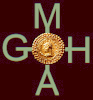
ROMAN REPUBLIC - ANONYMOUS - AR Didrachm or quadrigatus, uncertain Mint in South Italy, probably in Campania (225 - 214 BC)
weight 6,80gr. ; silver Ø 21mm.
obv. Beardless laureate Janiform head of the Dioscuri
rev. Jupiter in quadriga galloping right, driven by winged Victory;
Jupiter holding sceptre in left hand and hurling thunderbolt with right hand;
below, incuse inscription ROMA in linear frame
The quadrigatus is a medium-sized silver coin produced by the Roman Republic during the 3rd century BC. The first Roman silver coins were didrachms, minted in the first half of the 3rd century BC. The didrachm denomination was inspired by similar coins being issued at Greek cities in South Italy, though Rome′s pieces bore distinctly Roman designs. By the Second Punic War (218-201 BC) the didrachm had been ′replaced′ by the quadrigatus, which simply was a reduced-weight didrachm with a new design showing the janiform head of the Dioscuri, and Jupiter accompanied by Victory in a four-horse chariot (a quadriga). The obverse features a young janiform head of the Dioscuri and the reverse featured Victory driving a quadriga (four-horse chariot), giving the coin its name, with the inscription "ROMA" below. The coin weighed about 6.8 grams (6 scruples), consistent with the weight of a south Italian Greek didrachm. It was minted for a number of years until shortly before the introduction of the denarius (211 BC or a little earlier).
cf. NAC 61, lot 91 in xf- ; SFR 11.000 + 17,5%
Sydenham 64b ; Crawford 30/1 ; BMCRR Romano-Campanian 97 ;
RBW 74 ; Historia Numorum Italy, 336 ; Albert 85 ; cf. Sear 31 R
Attractive example with fine details. Rare.
xf- |
|
| |
|

 |
ROMAN REPUBLIC - ANONYMOUS - AR Didrachm or quadrigatus, uncertain Mint in South Italy (225 - 215 BC)
weight 6,65gr. ; silver Ø 21mm.
obv. Beardless laureate Janiform head of the Dioscuri
rev. Jupiter in quadriga galloping right, driven by winged Victory;
Jupiter holding sceptre in left hand and hurling thunderbolt with right hand;
below, inscription ROMA in relief in linear frame
The quadrigatus is a medium-sized silver coin produced by the Roman Republic during the 3rd century BC. The first Roman silver coins were didrachms, minted in the first half of the 3rd century BC. The didrachm denomination was inspired by similar coins being issued at Greek cities in South Italy, though Rome′s pieces bore distinctly Roman designs. By the Second Punic War (218-201 BC) the didrachm had been ′replaced′ by the quadrigatus, which simply was a reduced-weight didrachm with a new design showing the janiform head of the Dioscuri, and Jupiter accompanied by Victory in a four-horse chariot (a quadriga). The obverse features a young janiform head of the Dioscuri and the reverse featured Victory driving a quadriga (four-horse chariot), giving the coin its name, with the inscription "ROMA" below. The coin weighed about 6.8 grams (6 scruples), consistent with the weight of a south Italian Greek didrachm. It was minted for a number of years until shortly before the introduction of the denarius (211 BC or a little earlier).
cf. NAC 61, lot 91 in xf- (SFR 11.000 + 17,5%)
Sydenham 64d ; Crawford 29/3 ; BMCRR Romano-Campanian 101 ;
RSC 24 Albert 83 ; Sear 33 S
A few minor scratches on the obverse.
Attractive well-centered coin with fine details. Rare this nice.
xf- |
|
| |
|

 |
ROMAN REPUBLIC - ANONYMOUS - AE Quincunx, Luceria (circa 225-217 B.C.)
weight 95,40gr. ; copper 45mm.
obv. Cross with circle in centre
rev. Cross with circle in centre, five pellets in one of the corners
The five pellets refer to the value of the coin; 5 uncia
According to legend, the city of Luceria was founded by the Greek hero Diomedes, situated on the mountains of Daunia, overlooking the fertile Tavoliere. After the theft of the Trojan sanctuary Palladion, a statue of Pallas Athena on a pedestal, it would have been transferred to Luceria. In the written sources, we only come across Luceria in 326 BC, when the city declared itself an ally of Rome in the battle against the Samnites. The city eventually became a Latin colony.
The city was destroyed by the Byzantines in 663 and only rebuilt under Emperor Frederick II (1212-1250). The current Lucera has a well-preserved medieval centre. However, the showpiece is just outside; the Castello Svevo. This castle, built by Frederick II, is one of the largest in Italy. The circumference measures almost a kilometre, the height of the castle wall is 14 metres. The remains of a Roman amphitheatre from the first century are also located near the city.
Only a few pieces are known from this cointype. Extremely rare.
BMC 7 ; SNG.Copenhagen- ; Sydenham Aes Grave 70 ;
Thurlow-Vecchi 274 ; Historia Numorum, Italy 670 ; Förschner- ;
SNG.München- ; Haeberlin plate 70,7 ; Ars Classica 40 ,16 may 2007,
no.351 (vf- CHF 3.200+ 16.5%) ; Collection Sydenham 140
(auction Lugano in 1927,opbrengst Fr.400 !) RRR
vf/vf- |
|
| |
|

 |
ROMAN REPUBLIC - ANONYMOUS - AE Sextans, Rome, circa 225-217 BC
weight 24,96gr. ; bronze Ø 30mm.
obv. Head of Mercury right, wearing winged petasos, two pellet above
rev. Prow of galley right, ROMA above, two pellets below
The sextans was an Ancient Roman bronze coin produced during the Roman Republic valued at one-sixth of an as (2 unciae). The most common design for the sextans was the bust of Mercury and two pellets (indicating two unciae) on the obverse and the prow of a galley on the reverse. Mercury is a major god in Roman religion and mythology, being one of the 12 Dii Consentes within the ancient Roman pantheon. He is the god of financial gain, commerce, eloquence, messages, communication, divination, travelers, boundaries, luck, trickery, and thieves; he also serves as the guide of souls to the underworld.
Crawford 38/5 ; Sydenham 85 ; Albert 107 ; Sear 610 R
Some minor roughness. Attractive dark patina.
f/vf à vf- |
|
| |
|
|
| |
|
|
| |
|

 |
ROMAN REPUBLIC - ROMAN COINAGE MODELED ON PUNIC COINAGE - AV ¼ Shekel, circa 211-201 BC
weight 1,89gr. ; gold Ø 13mm.
obv. Head of Kore left, wearing wreath of two corn-ears
and leaf; ear-ring with one pendant and linear necklace,
on neck truncation in small letters; ROMA, in lower
the letters A - X (or monogram?) to the left and right of the
neck truncation, all within border of dots
rev. Horse standing righ on exergue line, within border of dots
This type of coin is also referred to as 1/5 or 1/4 goldstater in the reference literature. The datings also differ. For instance, the dates 230-220 and 203-201 BC are also applied to this type of coin.
The Carthaginian coins of the Second Punic War (218-201 BC) were struck in many locations, which led to many different designs being used. A 1/4 silver shekel of virtually the same design was struck by the Carthagians at a military mint in Southern Italy, probably a mint in Bruttium (Lokroi ?) or maybe Capua in Campania, at the time of Hannibal′s military campaigns there ca. 216-211 BC. For that reason, it is rather strange that this parallel gold coinage is attributed to the mint of Carthage in North Africa in the reference literature. The style of this coin is not very refined, and the overall craftsmanship appears somewhat sloppy. This also points to a military issue. It is much more likely that this type of coin was also minted in Southern Italy during military campaigns, most likely a mint in Bruttium (Lokroi ?) or maybe Capua in Campania.
Unlike the known examples of this coin type, this specimen has a very distinctive anomaly: text on the neck truncation that strongly resembles ROMA, and the letters A - X (or monogram?) to the left and right of the neck truncation. Unfortunately, due to the somewhat sloppy strike and slightly shifted die, the letters are only partially legible. This makes a definitive interpretation difficult. The X doesn′t look like a normal X but more like a monogram, which bears some resemblance to the ROMA monogram which we also see on Roman Republican coins struck in Southern Italy (see: Crawford 84 ; Albert 279-285).
My theory:
The silver 1/4 shekels from the years 216-211 BC were most likely minted in Bruttium (Lokroi ?) or maybe Capua in Campania during the Punic occupation. Towards the end of the Second Punic War, more and more cities fell into the hands of the Romans, which had previously been under Punic rule. This likely also happened to the minting city of the silver 1/4 shekels that were struck by the Carthaginians in the period 216–211. Because there was a constant need for money to pay the troops, it is possible that these gold 1/4 shekels were minted shortly after it had fallen into Roman hands. Probably the minting dies for the silver 1/4 shekels were still available, and the dies were slightly modified with the addition of the text ROMA and an indication (A - X) near the neck.
Highly interesting Roman coin of great historical importance,
which needs more study. Coin of the highest rarity.
SNG.Copenhagen - (cf. 389) ; Müller - (cf. 62) ;
cf. CNP (Viola) p. 37, no. 12; Sear - (cf. 6479) ;
Jenkins & Lewis - (cf. 464-467) ; McClean- ;
Alexandropoulos (MAA) - (cf. page 382, no.76) RRRR
slightly shifted obverse die
vf/xf |
|
| |
|
|
| |
|

 |
ROMAN REPUBLIC - ANONYMOUS - AE Quadrans, Mint in South-East Italy, circa 211-210 BC
weight 6,97gr. ; bronze Ø 20mm.
obv. Head of Hercules right, wearing lion′s skin, three pellets behind
rev. Prow of galley right, ROMA above, ROMA-monogram before,
three pellets below
cf. NAC Spring sale 2020, Lot 365 (in vf : SFR 700 + 20%)
Crawford 84/6 ; Sydenham 190b ; Albert 284 ;
BMCRR Italy, 195 ; RBW 345 ; Sear 1064 R
Struck weakly in the centre. Attractive dark patina. Rare.
vf- |
|
| |
|

 |
ROMAN REPUBLIC - ANONYMOUS - AE Semis, Luceria, circa 206-195 BC
weight 11,81gr. ; bronze Ø 28mm.
obv. Laureate head of bearded Saturn right, L below,
within beaded border
rev. Prow of galley right, S above, ROMA below
Luceria is an ancient city in the northern Apennines, located in the comune of Canossa in the Province of Reggio Emilia, on the right bank of the river Enza. Luceria probably arose as a mercantile centre in the 4th century BC. It was located in Gallia Cispadana, at the meeting point of three important communication routes: the old road which travelled from the river Po along the right bank of the river Enza to the south where it crossed the Apennines to Tuscia; the foothill track which connected the western zone to the east; and the mountain track which led up towards the hills where the Medieval castle would later be built.
The first inhabitants of the place were the Ligurians, probably the Friniati, who developed close ties with the neighbouring Etruscans of Servirola (modern San Polo d′Enza), after some initial hostility. They took advantage of the strategic position of their settlement to trade with settlements which were further afield too. In the 2nd century BC, the Roman Republic colonisted the Po Valley and became very interested in the nodal points of the various territories for both economic and military reasons. They settled at Luceria, leading to the development of a mixed population and the transformation of what had been just an open-air market into a proper town with houses, public buildings, paved roads, sidewalks and services for travellers, like accommodation for livestock with running water and warehouses for storing goods. The customs and traditions of the Ligurians did not disappear and the Romans did not impose their own culture. Instead, Roman culture merged with the native one slowly, probably accompanied by cross-cultural marriages. The Romanisation of Luceria dates to the Republican era, but the city actually became important later on, in the 1st and 2nd centuries AD, under the Roman Empire.
Crawford 97/17 ; Sydenham 304a ; Albert 239 ; Sear 786 R
some minor weakness, but very attractive for the type. Rare
vf |
|
| |
|

 |
ROMAN REPUBLIC - GR SERIES - AR Denarius, uncertain Italian mint (199-170 BC)
weight 2,51gr. ; silver Ø 20mm.
obv. Head of Roma with winged helmet to right, value X behind
rev. The dioscuri, Castor and Pollux, on horseback galloping right, cloak
floating behind, each holding horizontal lance, GR below, ROMA in exergue
Sear 68 ; Sydenham 289 ; Crawford 169/1 ;
Babelon Sempronia 1 ; Albert 501 RR
(cf. NAC auction 61, lot 721 in xf-: SFR 1.400 + 17,5%)
Irregular flan but attractive for the issue. Very rare.
vf+/vf |
|
| |
|
|
| |
|
|
| |
|

 |
ROMAN REPUBLIC - MANIUS MARCIUS, MNAEUS FILIUS - AR Denarius, Rome (134 BC) weight 3,81gr.; silver Ø 21mm.
weight 3,81gr.; silver Ø 21mm.
obv. Head of Roma right, wearing winged helmet,
XVI-monogram (Ӿ) below chin, modius behind
rev. Victory in biga galloping right, holding reins in left hand and whip in right hand,
M - MAR (in monogram) and RO - MA below horses devided by two corn-ears.
The gens Marcia, occasionally written Martia, was one of the oldest and noblest houses at ancient Rome. The Marcii are supposed to have been Sabines, descended from a certain Marcus Marcius of Cures, a kinsman of Numa Pompilius, and his son, Numa Marcius, a childhood friend of Pompilius, who accompanied him to Rome and served as his chief advisor. His son, the younger Numa Marcius, was urban prefect under Tullus Hostilius, and his grandson was Ancus Marcius, the fourth King of Rome. So they claimed descent from the second and fourth Roman Kings, and the first of the Marcii appearing in the history of the Republic would seem to have been patrician; but all of the families of the Marcii known in the later Republic were plebeian. The first to obtain the consulship was Caius Marcius Rutilus in 357 BC, only a few years after the passage of the lex Licinia Sextia opened this office to the plebeians.
Manius Marcius was triumvir monetalis in 134 BC. This denarius refers to his Manius Marcius, the plebeian aedile of 440 BC, who offered corn to the people for one as per modius, a very low price. The date of this magistrate is uncertain and still debated.
Crawford 245/1 ; Sydenham 500 ; Albert 940 ; Sear 122
Very attractive lustrous coin with excellent details. Near mint state.
unc- |
|
| |
|

 |
ROMAN REPUBLIC – TITUS CLOULIUS - AR Denarius, Rome (128 BC)
weight 3,86gr. ; silver Ø 18mm.
obv. Head of Roma right in winged helmet, crest with griffin head,
peaked visor in three pieces, wearing plain single drop earring and
necklace, hair in three locks, wreath behind, ROMA below
rev. Victory in a biga right with horses rearing high, reins in both hands,
head of grain below, T•CLOVLI in exergue
The gens Cloelia, originally Cluilia, and occasionally written Clouilia or Cloulia, was a patrician family at ancient Rome. The gens was prominent throughout the period of the Republic. The first of the Cloelii to hold the consulship was Quintus Cloelius Siculus, in 498 BC. Titus Cloulius was appointed triumvir monetalis in 128 BC. He was from Tarracina and possibly a popularis (type of senator). The Cluilii were one of the noble families of Alba Longa, where they succeeded the royal house of the Silvii. According to legend, Numitor, the grandfather of Romulus and Remus, was deposed by his brother, Amulius, and his sons were slain. When the princes had grown to manhood, they killed Amulius and restored their grandfather to the throne. As he had no surviving sons, it may be that upon Numitor′s death the throne passed to the Cluilii. The last king of Alba Longa, and the only one following Numitor whose name has survived in tradition, was Caius Cluilius.
During his reign, Tullus Hostilius, the third King of Rome (traditionally reigned from 673 to 641 BC), declared his intention to destroy Alba Longa and remove its inhabitants to Rome. Cluilius marched an army to Rome, where according to legend he constructed the Fossa Cluilia, an earthen trench, to fortify his position. During his siege, Cluilius died, and in his place, Mettius Fufetius was appointed dictator. Despite enlisting the help of the Fidenates, Fufetius and the Alban forces were defeated, and their ancient city was destroyed. Its inhabitants were transferred to Rome, where several of the noble families of Alba Longa, including the Cluilii, were enrolled in the senate, and subsequently numbered amongst the patricians.
In later times, when it became fashionable for Roman families to claim mythological origins, it was said that the gens was descended from Clolius, a companion of Aeneas. From an early date, the Cloelii bore the cognomen Siculus, perhaps referring to the legend that the people of Alba Longa was a mixture of two ancient Italic peoples, the Siculi and the Prisci. Whatever the origin of the family, it may be noted that during the first century of the Republic, two leaders of the Aequi, an Oscan people of central Italy, bore the nomen Cloelius.
The principal names of the Cloelii were Titus, Quintus, and Publius, all of which were very common throughout Roman history. Caius was borne by the earliest Cloelius whose name is known, and at least one respected member of the gens bore the ancient praenomen Tullus. The only major family of the Cloelii bore the cognomen Siculus, apparently referring to one of the Siculi, an ancient Italic people who had been expelled from the mainland, and subsequently lived in Sicily. Some trade links with Sicily could explain the adoption by the family of this very rare cognomen. The Cloelii Siculi appear at the very beginning of the Roman Republic, and filled the highest offices of the state until the 2nd century BC. The first of the family to achieve prominence is sometimes called Vocula, probably referring to a low or quiet voice. Another patrician cognomen was Tullus. The only other known cognomen was Gracchus, held by one of the Aequian Cloelii. The Cloelii recorded at the end of the Republic were plebeian.
The omission of the mark of value, X (XVI ligature), is unusual for the period. David Sear notes the mark may be concealed in the spokes of the biga wheels.
Crawford 260/1 ; Sydenham 516 ; RSC I Cloulia 1 ; Sear 136 ;
BMCRR I Roma 1079 ; Russo RBW 1055 ; Albert 987
xf- à vf/xf |
|
| |
|

 |
ROMAN REPUBLIC - MARCUS PORTIUS LAECA - AR Denarius, Rome (125 BC)
weight 3,80gr. ; silver Ø 17,5mm.
obv. Head of Roma with winged helmet right, LAECA behind,
value Ӿ below chin
rev. Libertas in quadriga galloping right, holding reins and
rod (vindicta) in left hand and pileus in right hand, being crowned
by Victory flying left, M•PORC below, ROMA in exergue.
The gens Porcia, rarely written Portia, was a plebeian family at Ancient Rome. The nomen Porcius was derived from porcus, a pig. The Porcii were reputed to have come from the ancient city of Tusculum in Latium. The chief praenomina of the Porcii were Marcus, Lucius, and Gaius, the three most common names throughout Roman history. The Porcii Catones favoured Marcus almost to the exclusion of the others, while the Porcii Licini favoured Lucius. The Porcii Laecae used Lucius and Publius, a name not known to have been used by the other two families. In the time of the Republic, there were three main branches of the Porcii, bearing the surnames Laeca, Licinus, and Cato, of which the most illustrious was Cato.
Its members first appear in history during the third century BC. The first of the gens to achieve the consulship was Marcus Porcius Cato in 195 BC, and from then until imperial times, the Porcii regularly occupied the highest offices of the Roman state. Marcus Porcius Laeca was apponted triumvir monetalis in 125 BC; his coins feature Libertas holding a pileus, the symbol of freedom, a reference to the Lex Porcia passed by Publius Porcius Laeca, the tribune of 199.
Crawford 270/1 ; Sydenham 513 ; Albert 1023 ; Sear 146
slightly off-centre strike
vf- |
|
| |
|

 |
ROMAN REPUBLIC - CAIUS PLUTIUS - AR Denarius, Rome (121 BC)
weight 3,82gr. ; silver Ø 18mm.
obv. Head of Roma right, wearing winged helmet, long hair, value X behind
rev. The dioscuri, Castor and Pollux, galloping right; cloak floating behind,
each wearing pileus and holding horizontal lance, two stars above,
C•PLVT below horses, ROMA in exergue
The gens Plutia was a plebeian family appearing to be of low importance for Roman history. This family is only known for this monetary magistrate in office who issued the denarius.
Crawford 278/1 ; Sydenham 410 ; Albert 1038 ; Sear 153
vf-
|
|
| |
|

 |
ROMAN REPUBLIC - CNAEUS DOMITIUS AHENOBARBUS - AR Denarius, Rome (116-115 BC)
weight 3,87gr. ; silver Ø 20mm.
obv. Helmeted head of Roma right, X behing, ROMA before
rev. Jupiter in slow quadriga right, holding branch and thunderbolt, CN•DOMI in exergue
Cnaeus Domitius Ahenobarbus (died 104 BC) was consul of Rome in 122 BC. He was the son of the Cnaeus Domitius Ahenobarbus who was consul in 162 BC. In the year of his consulship he was sent against the Allobroges in Gallia Transalpina, under the pretext that they had received Rome′s enemy, Teutomalius, king of the Salluvii, and had laid waste to the territory of Rome′s allies, the Aedui. Rome′s desire to create a secure land route to their provinces in Spain through Gaul was more likely its real reason for entering Gaul. He and Quintus Fabius Maximus Allobrogicus conquered the Allobroges and their ally, Bituitus, king of the Arverni, near Vindalium, at the confluence of the Sulga and Rhone, winning the battle mainly through terror caused by war elephants. He erected trophies to commemorate his victory, traveled on an elephant in procession through the province, and was honored with a triumph in 120 BC, at the fore of which he paraded the captive Bituitus. In 116-115 BC he formed a Triumviri Monetalis with Q.Curtius and M.Iunius Silanus. As censor in 115 BC, he expelled thirty-two senators from the senate. He is most famous for constructing the Via Domitia (ca. 118 BC), connecting Rome to her provinces in Spain. Constructed along an ancient trading road, crossing the Alps by one of the easiest passages, the Col de Montgenèvre, it is possibly the same pass taken by Hannibal in his famous crossing in 218 BC. It was built around the same time as the founding of Colonia Narbo Martius (Narbonne), the first Roman colony in Gaul. He was also elected Pontifex. He died around 104 BC.
Sydenham 535 ; Crawford 285-1 ; Albert 1053 ; Sear 161
xf- à vf/xf |
|
| |
|

 |
ROMAN REPUBLIC - CAIUS FONTEIUS - AR Denarius, Rome (114-113 BC)
weight 3,97gr. ; silver Ø 20mm.
obv. Beardless laureate Janifrom head of Dioscuri, X in lower field left,
XVI-monogram in lower field right
rev. Galley traveling left, C•FONT above, ROMA below
The gens Fonteia was a plebeian family at Rome. Members of this gens are first mentioned toward the end of the third century BC. In his oration, Pro Fonteio, Cicero mentions that the Fonteii came originally from Tusculum, of which municipium it was one of the most distinguished families. The Fonteii claimed descent from Fontus, the son of Janus. A two-faced head appears on this coin of the gens, which some historians in the past suppose to be the head of Janus, in reference to this tradition. But as Janus is always represented in later times with a beard, nowadays historians regard that the two heads refer to the Dioscuri, who were worshipped at Tusculum with especial honours, and who may be regarded as the Di Penates of the gens. The heads of the Dioscuri occur on other coins of the Fonteia gens. The founder of the city of Tusculum was Telegonus. He arrived there with a ship like this coin illustrates also.
Obviously the accent is on the characters on board this galley. The helmsman stands straight, looks proud, his left arm down to a rudder, the right arm to the horizontal, passing over a cabin and holding a vertical stick (a cane?). The head of 3 passengers exceeds (they are not rowers because the oars are 5 in number and their forward orientation would be an error). A second double-pitched roof cabin is also in front of the passengers.
cf. Ars Classica, auction 97, no.9 (xf CHF 3.750 + 20%)
Sear 167 ; Crawford 290-1 ; Sydenham 555 ; Albert 1068 ;
interesting historical coin with very attractive tone
vf/xf
|
|
| |
|

 |
ROMAN REPUBLIC - MANIUS AEMILIUS LEPIDUS - AR Denarius, Rome (114-113 BC)
weight 3,44gr. ; silver Ø 19mm.
obv. Laureate and diademed head of Roma right, value XVI in monogram behind,
ROMA in front (MA in monogram)
rev. Equestrian statue right, the naked horseman holding spear, on base
formed by triple-arch containing L-E-P, around MN•AEMILIO•
The gens Aemilia, originally written Aimilia, was one of the greatest patrician families at Rome. The gens was of great antiquity, and claimed descent from Numa Pompilius, the second King of Rome. Its members held the highest offices of the state, from the early decades of the Republic to imperial times. The Aemilii were almost certainly one of the gentes maiores, the most important of the patrician families. Their name was associated with two major roads (the Via Aemilia and the Via Aemilia Scauri), an administrative region of Italy, and the Basilica Aemilia at Rome.
Mn (Manius or Manlius) Lepidus Aemilius was a contemporary of the famous Marcus Lepidus Aemilius (120-77 BC), father of the triumvir and so may have been his brother or father. He seems to have achieved no other office after being moneyor in 114-113 BC. Marcus, in the wars between Marius and Sulla, belonged to the party of Sulla, but later became leader of the popular party. In his consulship of 78, he attempted to rescind the laws of Sulla but was opposed by Pompey and Catalus. In 77 he marched against Rome but was defeated by Pompeius Magnus and Catalus and fled.
Sydenham 554 ; Crawford 291 - 1 ; Albert 1074 ; Sear 168
Very attractive specimen with fine details.
vf/xf |
|
| |
|

 |
ROMAN REPUBLIC - PUBLIUS LICINIUS NERVA - AR Denarius, Rome (113-112 BC)
weight 3,86gr. ; silver Ø 16mm.
obv. Helmeted bust of Roma left, holding shield in left hand and spear over
shoulder in right; in left field value XVI in monogram, crescent above, ROMA behind
rev. Voting scene: three citizens in the comitium; one of them placing ballot
in cista. In middle field above, a tabella inscribed P and P•NERVA
One one of the most celebrated types of the Republican coinage this depicts the actual voting process in the political assembly of the Roman People in the Comitium, where citizens voted on business presented to them by magistrates. The area occupied by the Comitium was consecrated ground, like a temple, and was located in front of the Senate House in the Forum.
VOTING: By the late second century BC, there were two assemblies where adult Roman male citizens voted for candidates in elections and for proposed legislation, the Assembly of the Centuries and the Assembly of the Tribes (see Roman Government). Citizens voted in groups (centuries or tribes), entering a roped-off area and prceeding single file over raised gangways (pontes, ″bridges″). The voting procedure is depicted on the denarius offered here, issued by the moneyer P. Licinius Nerva in 113-112 BC. An attendant handed each voter a small wooden tablet covered with wax on which he inscribed his vote: V (for uti rogas, ″as you propose″ to support a bill), A (for antiquo, ″I vote against,″ to oppose a bill), or the candidate′s name in an election. He then dropped the tablet into a tall urn (cista). This was a time-consuming process requiring large spaces, so most voting was conducted in the Campus Martius. Julius Caesar began a large building for the electoral process in this area, the Saepta Julia, which was completed by Marcus Agrippa in 26 BC during the reign of Augustus.
Publius Licinius Nerva was a Roman politician during the Late Roman Republic. In his early career he was triumvir monetalis. As a propraetor he was assigned as Governor of Sicily in 104 BC at the outbreak of the Second Servile War. In the midst of the Cimbrian War, Italian allies of Rome, upon the mustering of troops, protested publicani tax farmers selling their citizens into slavery as punishment for tax arrears. As these abuses interfered with Roman ability to speedily raise troops, the Senate decreed that any citizen of an ally would be immediately emancipated. The Senate assigned Nerva to establish a tribunal in Sicily to determine who qualified for release.
A coalition of slaveholders in Sicily confronted the praetor and, with bribes and threats, shut the tribunal down. Due to the mounting pressure from the slaveholders and the slaves themselves, Nerva feared violent outbreaks from the side who came off worse in the confrontation and refused to listen to any more of the slaves′ complaints. Claiming that they would not face repercussions for their actions, Nerva told the slaves to disperse and return to their masters. However, the slaves instead decided amongst themselves to start a revolt. Nerva tried to put down the revolt, but failed to react with decision; by false promises he was able to return one body of the rebels to slavery, but neglected to address more serious outbreaks near Heraclea and near Lilybaeum. Eventually, Nerva dispatched a detachment of 600 soldiers to Heraclea but they were defeated, the slaves now gained confidence, having won a large supply of armaments. Nerva was replaced at the end of his term by Lucius Licinius Lucullus.
cf. Künker auction 367, lot 7672 (in vf+ with minor scratches: € 1.300 + 25%)
Sydenham 548 ; Crawford 292/1 ; Albert 1075 ; Sear 169 R
attractive toning
vf |
|
| |
|

 |
ROMAN REPUBLIC – TITIUS QUINCTIUS - AR Denarius, Rome (112 or 111 BC)
weight 3,82gr. ; silver Ø 18mm.
obv. Bust of Hercules, left, laureate, seen from behind,
draped with lion′s skin, club over right shoulder.
rev. Incusum of obverse
The gens Quinctia, sometimes written Quintia, was a patrician family at Rome. Throughout the history of the Republic, its members often held the highest offices of the state, and it produced some men of importance even during the imperial period. For the first forty years after the expulsion of the kings the Quinctii are not mentioned, and the first of the gens who obtained the consulship was Titus Quinctius Capitolinus Barbatus in 471 BC. As with other patrician families, in later times there were also plebeian Quinctii. Some of these may have been the descendants of freedmen of the gens, or of patrician Quinctii who had voluntarily gone over to the plebs. It is related that it was the custom in the Quinctia gens for even the women not to wear any ornaments of gold.
Sydenham 563 ; Crawford 297/1 ; Albert 1088 ; Sear 174 RR
Some minor roughness. As incusum very rare.
vf |
|
| |
|

 |
ROMAN REPUBLIC - MARCUS HERENNIUS - AR Denarius, Rome (108-107 BC)
weight 3,98gr. ; silver Ø 18mm.
obv. Diademed head of Pietas right, PIETAS behind (TA in monogram)
rev. One of the Catanian brothers running right, bearing his father on his shoulders,
controlmark V in right field, M•HERENNI in left field (HE in monogram)
Marcus Herennius was consul of the Roman Republic in 93 BC. Although a plebeian and an indifferent orator, he defeated Lucius Marcius Philippus in the consular election for 93 BC. Plinius mentions the consulate of Herennius as remarkable for the quantity of Cyrenaic silphium (Ferula tingitana), then brought to Rome. This costly drug was worth a silver denarius per pound; and the mercantile connections of the Herennii in Africa may have caused this unusual supply.
The brothers Catanae, Amphinomus and Anapias, saved the lives of their aged parents by carrying them away on their shoulders, from the eruption of Mount Etna, on Sicily, circa 263 BC. According to Roman legend, the stream of lava was said to have parted, and flowed aside so as not to harm them.
cf. Künker Auktion 367, lot 7689 (in xf: € 1.000 + 25%)
Sear 185 ; Crawford 308/1 ; Sydenham 567 ; Albert 1100 S
Very attractive and interesting historical coin.
vf/xf à vf+ |
|
| |
|

 |
ROMAN REPUBLIC - LUCIUS MARIUS, QUESTOR - AE Semis, Carteia (Spain, 104 BC)
weigh 7,85gr. ; copper Ø 23mm.
obv. Laureate head of Jupiter right, S behind
rev. Prow of galley right, S before, L•MARC above, CARTEI below
Carteia (modern San Roque) finds it origins in the 7th century BC, when then Phoenicians established themselves in the Cerro del Prado, 2 km northwest of the site. Three centuries later, the Carthaginians founded what we now know as Carteia. It was after the Punic Wars of the 3rd century BC that the Romans established themselves in the city. People born here, children of Hispanic women and Roman soldiers, were not recognised by Rome as citizens, so in 171 BC, Carteia′s 4000 inhabitants petitioned the Senate, and the town was granted colony status – making this the first Roman colony outside Italy. The town′s strategic position at the Mediterranean gateway established it as a major port; wood for boat-building, lead, iron and copper, and oranges, lemons and silver were among the riches than helped Carteia to flourish - over the next 580 years, its population boomed to about 25.000.
Sear- ; Crawford- ; Sydenham- ; Albert- ; FAB.622 RR
Attractive dark patina. Very rare.
vf |
|
| |
|

 |
ROMAN REPUBLIC - PUBLIUS SERVILIUS RULLUS, MARCUS FILIUS - AR Denarius, Rome (100 BC)
weight 3,78gr. ; silver Ø 19mm.
obv. Bust of Minerva left, wearing crested Corinthian helmet and aegis,
RVLLI behind
rev. Incusum of the obverse
The gens Servilia, or Serveilia, was an Alban family, transferred to Rome, after the destruction of Alba, by king Tullus, and elected into the patrician order. The Servilii were divided into numerous families; of these the names in the Republican period are Ahala, Axilla, Caepio, Casca, Geminus, Glaucia, Globulus, Priscus (with the agnomen Fidenas), Rullus, Structus, Tucca, and Vatia (with the agnomen Isauricus). The Structi, Prisci, Ahalae, and Caepiones were patricians; the Gemini originally patrician, and later plebeian; the Vatiae and Cascae plebeians. Other cognomina appear under the Empire. The only surnames found on coins are those of Ahala, Caepio, Casca, and Rullus.
cf. Sydenham 601 ; cf. Crawford 328-1 ; cf. Albert 1134 ; cf. Sear 207
Very rare error strike in a wonderful, nearly uncirculated, condition.
unc- |
|
| |
|

 |
ROMAN REPUBLIC - C. POBLICIUS MALLEOLUS - AR Denarius, Rome (98-96 BC)
weight 3,89gr. ; silver Ø 18mm.
obv. Helmeted head of Mars right, hammer above, XVI-monogram below chin
rev. Naked warrior standling left, holding spear, right foot set on cuirass,
trophee before, C•MAL and prow of galley on right (AL written in monogram)
Sydenham 615 ; Crawford 335-3a ; Albert 1150 ; Sear 216 R
(cf. NAC 27, lot 248 in xf : CHF 2.200 + 16,5%)
Very attractive coin with beautiful patina. Hard to find in this high grade condition.
xf- |
|
| |
|

 |
ROMAN REPUBLIC - DECIMUS JUNIUS SILANUS, LUCII FILIUS - AR Denarius, Rome (91 BC)
weight 3,93gr. ; silver Ø 17mm.
obv. Helmeted head of Roma right, Q behind
rev. Victory in biga right, D•SILANVS•L•F•ROMA in exergue
The gens Junia was one of the most celebrated families at Rome. The gens may originally have been patrician. The family was already prominent in the last days of the Roman monarchy. Lucius Junius Brutus was the nephew of Lucius Tarquinius Superbus, the seventh and last King of Rome, and on the expulsion of Tarquin in 509 BC, he became one of the first consuls of the Roman Republic.
Decimus Junius Silanus was the son of M. Junius Silanus, who commanded the army that was defeated by the Germanic Cimbri in Transalpine Gaul. Decimus was the stepfather of Marcus Brutus, the murderer of Caesar, having married his mother Servilia. He was elected consul in 63 for the following year ; and in consequence of his being consul designatus, he was first asked for his opinion by Cicero in the debate in the senate on the punishment of the Catilinarian conspirators. He was consul 62, with L. Licinius Morena, along with whom he proposed the Lex Licinia Julia.
Sear 225 ; Crawford 337-3 ; Sydenham 646 ; Albert 1161
Very attractive coin with appealing tone.
xf- |
|
| |
|

 |
ROMAN REPUBLIC - LUCIUS CALPURNIUS PISO FRUGI - AR Denarius, Rome (90 BC)
weight 3,90gr. ; silver Ø 18mm.
obv. Head of Apollo right, hair tied with band, X behind
rev. Naked horseman galloping to right, holding palm-branch,
XIIII above, L•PISO FRVGI and ROMA-monogram below
The gens Calpurnia was a plebeian family at Rome, which appears in history during the third century BC. The first of the gens to obtain the consulship was Caius Calpurnius Piso in 180 BC, but from this time their consulships were very frequent, and the family of the Pisones became one of the most illustrious in the Roman state. Two important pieces of Republican legislation, the lex Calpurnia of 149 BC and lex Acilia Calpurnia of 67 BC were passed by members of the gens.
This coin type depicts a beautiful portrait of Apollo. Firstly, that hairstyle. It′s… a strong look. The wreath, appropriate to Apollo, is tightly tied behind his head (tassels hang behind in a loop) and the hair on his crown tightly held down in neatly combed and rather regimented rows. Hair, when neatly coiffed, shows leisure time and wealth for humans, as they can afford to spend time and money getting it just so, but of course for a god such neat hair reflects Apollo′s beauty, and his somewhat effete nature. Cascading down past the tie are very thick and somewhat heavy looking corkscrew curls. When die cutters cast around for a model to emulate, they did not simply make up an Apollo according to how they felt he should look. To a greater or lesser extent they modelled their deities on well-known representational types. We tend to be able to group even full-scale marble statues into various different types according to which famous original archetype they emulate.
Also the reverse of this coin is very interesting. It is the depiction of the horse and rider at full gallop, but the jockey holds the palm branch of victory, eliding the moment of victory and the event leading up to it in a typically Roman manner. The horse is fully stretched out. The horse is slender and lean, his neck exaggerated in its extension, his flanks tucked in, his tail streaming out at 90 degrees. His rider leans forward in the attitude of a jockey, and the overall suggestion is of a horse and rider racing; military overtones are entirely lacking.
The link between the obverse is based on the family′s claim to have been instrumental in the founding of the Ludi Apollinares, at which games horseracing was a popular part. These games, founded over a century prior, enabled the moneyer to claim descent from an important and influential family. The choice of a venerable old Apollo type therefore supports their claim to longevity and ancestral importance.
♦ Amazing coin with excellent details. Mint state. Superb specimen. ♦
Crawford 340/1 ; Sydenham 650-671 ; Albert 1174 ; Sear 235
unc |
|
| |
|

 |
ROMAN REPUBLIC - LUCIUS CALPURNIUS PISO FRUGI - AR Denarius, Rome (90 BC)
weight 3,88 gramm ; silver Ø 18,5mm.
emissionmark helmet
obv. Laureate head of Apiollo right, helmet behind
rev. Naked horseman galloping to right, holding palm-branch,
L•PISO FRVGI / CXL VIIII below
The gens Calpurnia was a plebeian family at Rome, which appears in history during the third century BC. The first of the gens to obtain the consulship was Caius Calpurnius Piso in 180 BC, but from this time their consulships were very frequent, and the family of the Pisones became one of the most illustrious in the Roman state. Two important pieces of Republican legislation, the lex Calpurnia of 149 BC and lex Acilia Calpurnia of 67 BC were passed by members of the gens.
Sear 235 ; Crawford 340/1 ; Sydenham 650-671 ; Albert 1174
Coin of lovely style and with a very attractive patina.
xf
|
|
| |
|

 |
ROMAN REPUBLIC - GAIUS VIBIUS, CAIUS FILIUS PANSA - AR Denarius, Rome (90 BC)
weight 4,04gr. ; silver Ø 19mm.
obv. Laureate head of Apollo right, PANSA behind,
Cupido standing right with bow below chin, dotted border
rev. Minerva in quadriga right, holding trophy and spear,
C•VIBIVS C•F in exergue, dotted border
This coin was struck to commemorate the first siege of the Latins during the Social War (91-89 BC). The gens Vibia was a plebeian family at ancient Rome. Although individuals named Vibius appear in history during the time of the Second Punic War, no members of this gens are found at Rome until the final century of the Republic. The first of the Vibii to obtain the consulship was Caius Vibius Pansa in 43 BC, the son of this moneyer, and from then until imperial times the Vibii regularly filled the highest offices of the Roman state. The emperors Trebonianus Gallus and Volusianus each claimed descent from the family.
Sydenham 684 ; Crawford 342/5 ; Albert 1191 ; Sear 242
Light off-centre strike. Attractive example with fine details.
vf/xf |
|
| |
|

 |
ROMAN REPUBLIC - CAIUS VIBIUS, CAIUS FILIUS, PANSA - AR Denarius, Rome (90 BC)
weight 3,79gr. ; silver Ø 18mm.
obv. Laureate head of Apollo right, PANSA behind,
control mark below chin; owl standing right
rev. Minerva in quadriga right, holding trophy and spear,
C•VIBIVS C•F in exergue
This coin was struck to commemorate the first siege of the Latins during the Social War (91-89 BC). The gens Vibia was a plebeian family at ancient Rome. Although individuals named Vibius appear in history during the time of the Second Punic War, no members of this gens are found at Rome until the final century of the Republic. The first of the Vibii to obtain the consulship was Caius Vibius Pansa in 43 BC, the son of this moneyer, and from then until imperial times the Vibii regularly filled the highest offices of the Roman state. The emperors Trebonianus Gallus and Volusianus each claimed descent from the family.
Specimens with controlmark “owl standing right” are rare.
Sydenham 684 ; Crawford 342/5 ; Albert 1191 ; Sear 242
vf- à f/vf |
|
| |
|

 |
ROMAN REPUBLIC - LUCIUS TITURIUS SABINUS - AR Denarius, Rome (89 BC)
weight 3,79gr. ; silver Ø 19mm.
obv. Bare head of king Tatius right, bearded, TA-monogram in front,
SABIN behind
rev. Two Roman soldiers running, each bearing a Sabine woman in his arms
("rape of the Sabine women"), L.TITVRI in exergue
The gens Tituria was of uncertain order (plebeian or patrician) and did appear to be of low importance. The name of the moneyer, Sabinus, is referred to by the pictorial types of this coin but is unlikely to be a claim of Sabine origin of the man. When Rome was first settled the Sabine people were their neighbours. According to the legend, the Romans sought Sabine wives but were rejected by the Sabine people. In response to the rejection the Romans invited the Sabines to a festival and then abducted the Sabine women who attended (pictured on the reverse of the coin). With their king, Titus Tatius (depicted on the obverse), the Sabines returned in force. The daughter of the governor of the Roman citadel, Tarpia, opened the gates after arranging to be given what the Sabine soldiers had on their arms. She was referring to golden bracelets, but they, feeling that their shields fulfilled the arrangements, crushed her and threw the body off a rock (afterwards known as the Tarpean Rock). The Romans fought back and soon looked like they would win. At that point the the Sabine women intervened declaring that they were happy with their new husbands and status in Roman society but if the battle continued either these husbands or their fathers and brothers would perish; neither of which they wanted. Peace was made and Tatius ruled jointly with Romulus and Remus.
cf. Künker Auktion 367, lot 7740 (in xf with light scratches; € 3.000 + 25%)
Sydenham 698 ; Crawford 344/1 ; Babelon 1 ;
Banti 2/17 ; Albert 1198 ; Sear 249
Minor weakness but very attractive historical coin, lightly toned, with fine details.
xf- |
|
| |
|

 |
ROMAN REPUBLIC - CNAEUS CORNELIUS LENTULUS CLODIANUS - AR Denarius, Rome (88 BC)
weight 3,69gr. ; silver Ø 17mm.
obv. Helmeted bust of Mars right, with spear over left shoulder and sword over right
rev. Victory standing right in biga, holding wreath in right hand and reins in left,
CN•LENTVL in exergue
The gens Cornelia was one of the greatest patrician houses at ancient Rome. The origin of the Cornelii is lost to history, but the nomen Cornelius may be formed from the hypothetical cognomen Corneus, meaning ″horny″, that is, having thick or callused skin. For more than seven hundred years, from the early decades of the Republic to the third century AD, the Cornelii produced more eminent statesmen and generals than any other gens. At least seventy-five consuls under the Republic were members of this family, beginning with Servius Cornelius Maluginensis in 485 BC. Together with the Aemilii, Claudii, Fabii, Manlii, and Valerii, the Cornelii were almost certainly numbered among the gentes maiores, the most important and powerful families of Rome, who for centuries dominated the Republican magistracies. All of the major branches of the Cornelian gens were patrician, but there were also plebeian Cornelii, at least some of whom were descended from freedmen.
Although born (114 BC) into the plebeian Claudii Marcelli family, Clodianus was adopted into the patrician Cornelii Lentuli, possibly as the adoptive son of Cnaeus Cornelius Lentulus. He possibly served under Pompey during Pompey′s special commission in Hispania and was moneyer in the year 88 BC. Elected Praetor around 75 BC, his connections with Pompey ensured that he was elected consul in 72 BC. The major event of his consulship was the revolt of Spartacus and the eruption of the Third Servile War. Having won a number of victories against ill-prepared Roman forces, the Senate now recognised Spartacus as a serious threat and sent both the consuls to confront the slave armies at the head of four legions. Clodianus moved to block Spartacus′s march northward, while his colleague Publicola moved in behind, hoping to catch the rebels between the two armies. However, Spartacus′s slave army destroyed Clodianus′ legions in the Apennine Mountains (near modern Pistoia) in the valley named Lentula, and then turned and defeated the oncoming legions of Publicola. Gathering their shattered forces, both consuls gave chase but were once again defeated at a battle near Picenum. Humiliated by these defeats, shortly afterward, in early autumn, Clodianus and Publicola were withdrawn as commanders by the Roman senate, and command of the war given to Marcus Licinius Crassus. This setback to Clodianus′s career was only temporary; with the support of Pompey, both Clodianus and Publicola were appointed censor in 70 BC. In 70 BC, Clodianus helped contribute to Cicero′s famous prosecution of the corrupt governor Verres by submitting evidence in support of Cicero′s case. By 67 BC, Clodianus was serving as a legate with praetorian imperium under Pompey, who had received an extraordinary command to rid the Mediterranean Sea of pirates. Clodianus was given command of the east coast of Italy, with his fleet patrolling the coast of the Adriatic Sea. By 66 BC he was back in Rome, where he gave his support to the Lex Manilia, which gave Pompey command of the war against King Mithridates VI of Pontus. Although Clodianus was a noted orator, it was said that he hid his lack of talent through showmanship and the possession of a good voice.
Sydenham 702 ; Crawford 345/1 ; Albert 1205 ; Sear 254
some weakness
f/vf
|
|
| |
|

 |
ROMAN REPUBLIC - CAIUS MARCIUS CENSORINUS - AR Denarius, Rome (88 BC)
weight 3,76gr. ; silver Ø 16mm.
obv. Conjoined diademed heads of king Numa Pompilius, bearded,
and king Ancus Marcius, bearsless, right
rev. Desultor on horseback galloping right, wearing pileus (conical cap),
with second horse at his side, holding whip with right hand and holding
reins for both horses with left hand, C•CENSO in exergue.
The Marcii Censorini were a branch of the plebeian gens Marcia, but Ronald Syme notes their ″ancestral prestige, barely conceding precedence to the patriciate.″ They had been supporters of Caius Marius and were consistent populares throughout the civil wars of the 80s and 40s–30s. The cognomen Censorinus was acquired through Caius Marcius Rutilus, in 357 BC the first elected consul, whose son used it. The Gens Marcia claimed to be decendants of the Roman kings Numa Pompilius (legendary second king of Rome), and Ancus Marcius, beardless (his grandson, the legendary fourth king of Rome), which is illustrated on this coin, and symbolically from Marsyas the satyr, who was associated with free speech and political liberty.
Caius Marcius Censorinus was a moneyer in 88 BC. In 87, as a military tribune or prefect, he commanded the cavalry that attacked and killed the consul Gnaeus Octavius, then brought his head to Cinna; the historian Appian remarks that this was the first time a head of a consul was displayed on the Rostra, but unfortunately not the last. In 82, near the end of the civil war between Sulla and the Marian-Cinnan faction, Carbo sent Censorinus with eight legions to the aid of the besieged Praeneste, but he was ambushed by Pompeius near Sena Gallica. After Carbo fled to Africa, Censorinus was among the officers who made a last-ditch effort to break the line of Sulla that culminated in defeat at the Battle of the Colline Gate.
Very rare variety; no control-mark below the horses.
cf. Sear 256 ; cf. Sydenham 713 ; cf. Crawford 346/1i ;
RSC I Marcia 18a ; BMCR 2367 ; cf. Albert 1209 RR
(cf. NAC Auction 92, lot 1797 in xf; SFR 3.750 + 20%)
Minor scratch and reverse struck slightly off-centre.
vf/vf- |
|
| |
|

 |
ROMAN REPUBLIK - MARCUS FANNIUS & LUCIUS CRITONIUS - AR Denarius, Rome (86 BC)
weight 4,03gr. ; silver Ø 19mm.
obv. Bust of Ceres right, draped, wreathed with corn;
behind, inscription of the aediles; AED•PL
rev. The two aediles seated right on subsellium, ear of corn before,
P•A in field to left, M•FAN•L•CRIT in exergue
The plebeian aediles were created in 494 BC and originally intended to be assistants to the tribunes. Subsequently, they assumed responsibility for maintenance of the city′s buildings. This exceptional issue by the plebeian aediles was produced from ′public silver′ (P A = Publio Argento), withdrawn from the state′s bullion reserves. Crawford makes the interesting suggestion that these coins (and certain others of the period) were struck from the money bequeated to the Roman People by Ptolomy X of Egypt.
Sear 267 ; Sydenham 717 ; Cr.351/1 ; Albert 1228
vf- |
|
| |
|

 |
ROMAN REPUBLIC - C. GARGONIUS, M. VERGILIUS & OGULNIUS - ANONYMOUS - AR Denarius, Rome (86 BC)
weight 4,10gr. ; silver Ø 18mm.
obv. Laureate head of Apollo right, thunderbolt below
rev. Jupiter in quadriga right, brandishing thunderbolt
This anonymous denarius is obviously connected by type with the
signed denarii of Caius Gargonius, Ogulnius and Marcus Vergilius.
The triumvir monetalii of 86 BC. The reason for this exceptionally
late issue of anomynous coins is unclear.
The anonymous Roman denarius of 86 BC (Crawford 350a/2) features the head of Apollo (or a youthful Vejovis/Jupiter) with a thunderbolt on the obverse, and Jupiter driving a triumphal quadriga on the reverse. This pairing symbolizes supreme divine authority, military victory, and an appeal for civic restoration and protection during the height of Rome′s internal civil wars.
The youthful deity head on the obverse represents light, prophecy, healing, and harmony. The accompanying thunderbolt symbol hints at celestial power and a blending of divine attributes, tying the prophetic grace of Apollo to the raw power of the king of gods.
The reverse depicts Jupiter, supreme ruler of the pantheon, brandishing a thunderbolt from a fast-moving four-horse chariot. It symbolizes ultimate sovereignty, divine protection of the Roman state, and military triumph.
Context of Crisis: Minted during 86 BC, a turbulent year marked by the civil conflicts between Marius and Sulla, anonymous or "pseudo-anonymous" issues like this closely mirrored signed coinages of contemporary moneyers (such as Gargonius, Ogulnius, and Vergilius).
Sear 266 ; Crawford 350a/2 ; Sydenham 723 ; Albert 1223
Coin of excellent style, perfectly centered,with appealing tone.
A very attractive example of this interesting issue.
vf/xf |
|
| |
|

 |
ROMAN REPUBLIC - LUCIUS MARCIUS CENSORINUS - AR Denarius, Rome (82 BC)
weight 3,77gr. ; silver Ø 16mm.
obv. Laureate head of Apollo right
rev. The satyr Marsyas walking left with his right arm raised,
carrying skin made winesack over left shoulder, column with
Apollo playing the lyre behind, L•CENSOR before
The Marcii Censorini were a branch of the plebeian gens Marcia, but Ronald Syme notes their ″ancestral prestige, barely conceding precedence to the patriciate.″ They had been supporters of Caius Marius and were consistent populares throughout the civil wars of the 80s and 40s–30s. Lucius Marcius Censorinus was one of Sulla′s enemies in 88 BC. He was apponted monetalis of Rome in 82 BC, and an officer, perhaps prefect of the fleet in 70 BC. The cognomen Censorinus was acquired through Caius Marcius Rutilus, in 357 BC the first elected consul, whose son used it. The gens Marcia claimed descent from both Ancus Marcius, a king of Rome, and symbolically from Marsyas the satyr, who was associated with free speech and political liberty.
According to the usual Greek version, Marsyas found the aulos (double pipe) that the goddess Athena had invented and thrown away and, after becoming skilled in playing it, challenged Apollo to a contest with his lyre. There are several versions of the contest; according to Hyginus, Marsyas was departing as victor after the first round, when Apollo, turning his lyre upside down, played the same tune. This was something that Marsyas could not do with his flute. According to Diodorus Siculus, Marsyas was defeated when Apollo added his voice to the sound of the lyre. Marsyas protested, arguing that the skill with the instrument was to be compared, not the voice. However, Apollo replied that when Marsyas blew into the pipes, he was doing almost the same thing himself. The Nysean nymphs supported Apollo′s claim, leading to his victory. Marsyas was tied to a tree and flayed him. His skin was displayed at Calaenae in southern Phrygia, as the Greek historians Herodotus and Xenophon report.
Yet another version states that Marsyas played the flute out of tune, and hence accepted his defeat. Out of shame, he assigned to himself the penalty of being skinned for a winesack. This version is depicted on this coin.
On the reverse of this coin a statue is depicted located in the forum near the praetorian tribunal. Copies of this statue in various cities of the empire later announced that the respective city had been gifted with the Ius Italicorum.
Crawford 363/1 ; Sydenham 737 ; Albert 1254 ; Sear 281
(cf. Künker Auktion 367, lot 7766 in xf-/xf: € 650 + 25%)
very attractive specimen with fine details
xf- |
|
| |
|

 |
ROMAN REPUBLIC - LUCIUS CORNELIUS SULLA, DICTATOR, 82-80 BC - AR Denarius, probably Vibo valenta (81 BC)
weight 3,93gr. ; silver Ø 19mm.
obv. Diademed head of Venus, with necklace, right
rev. Double cornucopiae, Q below
Lucius Cornelius Sulla Felix, known commonly as Sulla, was a Roman general and statesman. He had the distinction of holding the office of consul twice, as well as reviving the dictatorship. Sulla was a skillful general, achieving numerous successes in wars against different opponents, both foreign and Roman. He was awarded a grass crown, the most prestigious Roman military honor, during the Social War. Sulla′s dictatorship came during a high point in the struggle between optimates and populares, the former seeking to maintain the Senate′s oligarchy, and the latter espousing populism. In a dispute over the eastern army command (initially awarded to Sulla by the Senate but withdrawn as a result of Gaius Marius′s intrigues) Sulla marched on Rome in an unprecedented act and defeated Marius in battle. In 81 BC, after his second march on Rome, he revived the office of dictator, which had been inactive since the Second Punic War over a century before, and used his powers to enact a series of reforms to the Roman Constitution, meant to restore the primacy of the Senate and limit the power of the tribunes. Sulla′s ascension was also marked by political purges in proscriptions. After seeking election to and holding a second consulship, he retired to private life and died shortly after. Sulla′s decision to seize power – ironically enabled by his rival′s military reforms that bound the army′s loyalty with the general rather than to Rome – permanently destabilized the Roman power structure. Later leaders like Julius Caesar would follow his precedent in attaining political power through force.
This type can best be explained as an emergency issue in the south of Italy, produced in connection with the various military campaigns on the period. There also exist aureii of this type. Rare historical coin.
cf. NAC, auction 63, no.174 (about xf ; CHF 2800 + 17,5%)
Crawford 375/2 ; Sydenham 755 ; Babelon Cornelia 33 ;
Albert 1269 ; Sear 303
wonderful coin with attractive toning
xf- |
|
| |
|

 |
ROMAN REPUBLIC - QUINTUS CAECILIUS METELLUS PIUS - AR Denarius, Northern Italian mint (81 BC)
weight 4,03gr.; silver Ø 18mm.
obv. Diademed head of Pietas right, stork before
rev. Elephant walking left, Q•C•M•P•I in exergue
Quintus Caecilius Metellus Pius (c. 130 BC – 63 BC) was a pro-Sullan politician and general who was Roman consul in 80 BC. He was the principal Senatorial commander during the Sertorian War, fighting alongside Pompeius Magnus. He was given the agnomen (nickname) ″Pius″ because of his constant and unbending attempts to have his father officially recalled from exile. The issuer strikes as imperator in northern Italy, where he was campaigning on behalf of Sulla. The following year he was to be the dictator′s colleague in the consulship.
The elephant on the revers refers to an ancestor of this moneyer, Lucius Caecilius Metellus (circa 290 BC – 221 BC) was the son of Lucius Caecilius Metellus Denter. He was Consul in 251 BC and 247 BC, Pontifex Maximus in 243 BC and Dictator in 224 BC. He defeated the Carthaginian general Hasdrubal at the celebrated Battle of Panormus (250 BC), a turning point of the First Punic War which led to Roman domination of Sicily. In that battle he defeated thirteen enemy generals and captured one hundred and twenty elephants, some of which he exhibited to the Roman people. For this victory he received the Honours of the Triumph.
Crawford 374/1 ; Sydenham 750 ; Albert 1266 ; Sear 301 R
(cf. Numismatica Ars Classica, auction 70, no. 132 , about xf ; CHF 1500 + 18%)
Some light scratches on the obverse. Very attractive coin with attractive tone.
vf/xf à xf- |
|
| |
|

 |
ROMAN REPUBLIC - LUCIUS PROCILIUS - AR Denarius, Rome (80 BC)
weight 4,10gr. ; silver Ø 17mm.
obv. Laureate head of Jupiter right, S•C behind
rev. Juno Sospita walking right, brandishing spear and holding shield,
snake at her feet, L•PROCILI F behind
The gens Procilia, sometimes written Procillia, was a minor plebeian family at ancient Rome. The Procilii may have come from Lanuvium, an ancient city of Latium. This coin appears to allude to such an origin, depicting Juno Sospita, whose worship was centered on Lanuvium.
Members of this gens are first mentioned during the final century of the Republic, but few of them obtained any position of importance in the Roman state, and they are best known as a result of the historian Procillius, a contemporary of Cicero, whose work has been lost, but who was cited as a source by the Roman antiquarians.
Juno was the sister and consort of the god Jupiter, and queen mother of the gods, and the deity of Roman women, in various guises. As Juno Sospita, she received fervent invocations at the time of labor and the delivery of the newborn.
cf. NAC auction 63, lot 182 (in xf; SFR 2.000 + 17,5%)
cf. NAC auction 143, Zürich 7 May 2024, Lot 214 (in unc- : SFR 4.500 + 22,5%)
Sydenham 771 ; Crawford 379/1 ; RBW 1406 ; Albert 1273 ; Sear 306
wonderful example, with delicate tone
xf |
|
| |
|

 |
ROMAN REPUBLIC - CAIUS POBLICIUS QUINTUS FILIUS - AR Denarius serratus, Rome (80 BC)
weight 4,00gr. ; silver Ø 19mm.
obv. Draped bust of Roma right, wearing Phrygian helmet
ornamented with plumes on sides, O above, ROMA behind
rev. Hercules strangling the Nemean lion, a club lies at his feet,
O and a bow and quiver on left, C• POBLICI Q•F on right
The reverse may refer to Sulla′s victory over the Marius party. The gens Poblicia was a plebian family, but of consular rank. The gens Policia was responsible for the care over the temple of Hercules.
Although the moneyer is unattested except for his coins, his family is well known for having built the small Aventine road, the Clivus Poblicius, as well as the temple of Flora, whose games they instituted in 241 BC. The types chosen by the moneyer for his coins should probably be viewed in light of Sulla′s victories, but possibly there is a family connection as well. The reverse type showing Hercules strangling the Nemean lion may allude to the moneyer′s family origins at Cora, where there was a famous temple to Hercules, and from Cora even further back to Argos and the valley of Nemea where Hercules killed the lion. The Phrygian helmet worn by Roma seems to be a simple artistic feature, with no further significance other than perhaps reflecting an awareness of Trojan origins.
cf. Künker Auktion 367, lot 7785 (in xf-/xf: € 2.200 + 25%)
Crawford 380/1 ; Sydenham 768 ; Albert 1275 ; Sear 308
Boldly struck, delicately toned.
vf/xf à xf- |
|
| |
|

 |
ROMAN REPUBLIC - GNAEUS CORNELIUS LENTULUS MARCELLINUS - AR Denarius, Spain (76-75 BC)
weight 4,01gr. ; silver Ø 18mm.
obv. Draped bust of the Genius Populi Romani right,
hair tied with band and scepter over shoulder, G•P•R above
rev. Sceptre with wreath. globe and rudder, EX - S•C at sides,
CN•LEN.Q below
Cn. Lentulus strikes in Spain in his capacity as quaestor to the proconsul Pompey, who had been sent to the peninsula to assist Q.Caecilius Mettellus Pius in the protracted war against Sertorius.
The gens Cornelia was one of the most distinguished Roman gentes, and produced a greater number of illustrious men than any other house at Rome. Servius Cornelius Cossus Maluginensis was first to achieve the consulship in 485 BC. The gens was a major contributor to the highest offices of the Republic, and contested for consulships with the Fabii and the Valerii from the 3rd century BC. Over thirty percent of all consulships were held by men from Cornelii; several great commanders also came from this family.
Sear 323 ; Crawford 393-1a ; Sydenham 752 ; Albert 1288 ; Babelon Cornelia 54
(vgl.Ars Classica Auction 63, no.209 xf CHF 1000 + 17,5%)
Coin with very attractive tone.
A wonderful portrait of the Genius Populi Romani.
good xf |
|
| |
|

 |
ROMAN REPUBLIC - CNAEUS CORNELIUS LENTULUS MARCELLINUS - AR Denarius, Spain (76-75 BC)
weight 3,89gr. ; silver Ø 18mm.
obv. Draped bust of the Genius Populi Romani right,
hair tied with band and scepter over shoulder, G•P•R above
rev. Sceptre with wreath. globe and rudder, EX - S•C at sides,
CN•LEN.Q below
Cnaeus Lentulus strikes in Spain in his capacity as quaestor to the proconsul Pompey, who had been sent to the peninsula to assist Q.Caecilius Mettellus Pius in the protracted war against Sertorius.
The gens Cornelia was one of the most distinguished Roman gentes, and produced a greater number of illustrious men than any other house at Rome. Servius Cornelius Cossus Maluginensis was first to achieve the consulship in 485 BC. The gens was a major contributor to the highest offices of the Republic, and contested for consulships with the Fabii and the Valerii from the 3rd century BC. Over thirty percent of all consulships were held by men from Cornelii; several great commanders also came from this family.
cf. NAC Auction 63, no.209 (in xf CHF 1000 + 17,5%)
Sear 323 ; Crawford 393-1a ; Sydenham 752 ; Albert 1288 ; Babelon Cornelia 54
Coin with very attractive tone.
vf/xf à xf- |
|
| |
|
|
| |
|

 |
ROMAN REPUBLIC - QUINTUS FUFIUS CALENUS & PUBLIUS MUCIUS SCAEVOLA CORDUS - AR Denarius serratus (70 BC), Rome
weight 3,88gr. ; silver Ø 20mm.
obv. Conjoined heads of Honos and Virtus right, the former laureate,
the latter helmeted, HO behind, VIRT (RT ligatured) before, KALENI below
rev. Italia standing right, holding cornucopiae, clasping hands with Roma
standing left, holding fasces, right foot placed on globe, caduceus above
ITAL-monogram in field to left, RO in field to right, CORDI in exergue
Quintus Fufius Calenus (died 40 BC) was a Roman general, and consul in 47 BC. Already in 70 he held office as monetalis of Rome, together with Pulius Municius Scaevola Cordus. As tribune of the plebeians in 61 BC, he was chiefly instrumental in securing the acquittal of the notorious Publius Clodius when charged with having profaned the mysteries of Bona Dea (Cicero, Ad. Att. 1.16). In 59 BC Calenus was praetor, and brought forward a law that the senators, knights, and tribuni aerarii, who composed the judices, should vote separately, so that it might be known how they gave their votes (Cassius Dio xxxviii. 8). He fought in Gaul (51 BC) and Spain (49 BC) under Julius Caesar, who, after he had crossed over to Greece (48 BC), sent Calenus from Epirus to bring over the rest of the troops from Italy. On the passage to Italy, most of the ships were captured by Bibulus and Calenus himself escaped with difficulty. In 47 BC, he was raised to the consulship through the influence of Caesar. After the death of the dictator, he joined Marcus Antonius, for whom he commanded eleven legions in the north of Italy. Calenus died in 40 BC, while stationed with his army at the foot of the Alps, just as he was on the point of marching against Octavianus; but Calenus′ son handed over the legions to the future emperor.
The gens Mucia was an ancient and noble patrician house at ancient Rome of Tuscan origin. The gens is first mentioned at the earliest period of the Republic, but in later times the family was known primarily by its plebeian branches. The first of the Mucii to appear in history is Caius Mucius Scaevola, a young man at the inception of the Roman Republic. According to legend, he volunteered to infiltrate the camp of Lars Porsena, the king of Clusium, who besieged Rome circa 508 BC, and who may in fact have captured and held the city for some time. Mucius, armed with a dagger, attempted to assassinate Porsena, but unfamiliar with Etruscan dress, he mistook the king′s secretary for the king, and was captured. Brought before the king, Mucius declared that he was but one of three hundred Roman men who had sworn to carry out this mission, or die in the attempt. As a show of bravery, it was said that he thrust his right hand into a brazier, and stood silently as it burned. Porsena was so impressed by his courage and endurance that Mucius was freed, and some traditions held that Porsena withdrew his army in fear of the threat of assassination invented by the young Roman. Due to this event, the major family of the Mucii, originally with the cognomen Cordus, bore the extra cognomen Scaevola (the left handed).
This silver denarius was minted in Rome by Quintus Fufius Calenus and Publius Mucius Scaevola Cordus in 70 BC. It is a type known as a denarius serratus, due to its serrated edge. The reverse depicts Italia (Italy) on the left and Roma (Rome) on the right. Italia holds a cornucopia, behind her a caduceus. Roma holds fasces and rests her foot on a globe. Inscriptions identify the goddesses and one moneyer. The domination of Rome is symbolised by the fasces, rods used in judicial matters, and the globe. Current propaganda is carried out with the coinage; In the previous year Pompeius had victoriously ended the Sertorius War and the Spartacus uprising; In 70 he held his first consulate, in which the census began with the registration of all new Italian citizens, thus finally settling the Social War.
Very rare this nice. An amazing coin.....
cf. NAC auction 143, Zürich 7 May 2024, Lot 241 (in unc- : SFR 3.750 + 22,5%)
Sear 338 ; Crawford 403-1 ; Sydenham797 ; Albert 1305 R
Uncirculated lustrous coin of fine style with excellent details. Mint state.
fdc |
|
| |
|

 |
ROMAN REPUBLIC - CAIUS CALPURNIUS PISO FRUGI, Lucius Filius - AR Denarius, Rome (67 BC)
weight 3,67gr. ; silver Ø 18,5mm.
obv. Head of Apollo right, hair tied with band, club behind
rev. Naked horseman galloping to right, holding palm-branch,
T above, C•PISO L F•FR and ROMA-monogram below
The gens Calpurnia was a plebeian family at Rome, which appears in history during the third century BC. The first of the gens to obtain the consulship was Caius Calpurnius Piso in 180 BC, but from this time their consulships were very frequent, and the family of the Pisones became one of the most illustrious in the Roman state. Two important pieces of Republican legislation, the lex Calpurnia of 149 BC and lex Acilia Calpurnia of 67 BC were passed by members of the gens.
In 66 BC, Tullia was betrothed to Caius Calpurnius Piso Frugi. They were married in 63, when Tullia was fifteen or sixteen, and Piso not much older. Tullia was the first child and only daughter of Roman orator and politician Marcus Tullius Cicero. With this marriage Caius Calpurnius Frugi became the son-in-law of Cicero, to whose interests he was devoted.
His coin types are the same as those of his father Lucius, who had held the moneyer′s office about 90 BC. Caius′ coinage, though much smaller in volume, is equally impressive in its complexity. Crawford′s early date (67 BC) has been challenged on the basis of hoard evidence which would seem to indicate a period of issue closer to 60 BC.
cf. Auction Ars Classica 63, no.236 (xf/unc CHF 3750 + 17,5%)
Crawford 408/1a ; Sydenham 865c ; Albert 1315 ; Sear 348
A very pleasing example with the obverse portrait
struck in high relief and wonderful tone.
xf-/xf |
|
| |
|

 |
ROMAN REPUBLIC - QUINTUS POMPONIUS MUSA - AR Denarius, Rome (66 BC)
weight 3,95gr. ; silver Ø 19mm.
obv. Head of Apollo right, hair tied with band,
Q•POMPONIVS behind, MVSA in front
rev. Hercules standing right, wearing lion’s skin and playing lyre,
in lower right field club, HERCVLES in front, MVSARVM behind
The gens Pomponia was a plebeian family at Rome throughout the period of the Republic and into imperial times. The first of the gens to achieve prominence was Marcus Pomponius, tribune of the plebs in 449 BC; the first who obtained the consulship was Manius Pomponius Matho in 233 BC.
The moneyer Quintus Pomponius Musa plays on his name here by striking a 10-coins as a serie related to the myth of the Muses: 9 coins representing the 9 Muses along with one coin representing Hercules. Hercules is known in Greece, and as represented on this coin, as Hercules Musarum or Hercules Musageta, meaning Hercules, leader of the Muses.
The reverses of this series – Hercules playing the lyre and the Muses, can be none other than the celebrated statue group by an unknown Greek artist, taken from Ambracia and placed in the Aedes Herculis Musarum, which was erected by M. Fulvius Nobilior in 187 BC after the capture of Ambracia in 189 BC (Plin. NH xxxv.66; Ov. Fast. vi.812). By the second century BC Rome had overrun most of Greece and was captivated by Hellenic art and culture, not the least of which was its sculpture. Fulvius is said to have taken the statues to Rome because he learned in Greece that Hercules was a musagetes (leader of the Muses). Remains of this temple have been found in the area of the Circus Flaminius close to the south-west part of the circus itself, and north-west of the porticus Octaviae. An inscription found nearby,′M. Fulvius M. f. Ser. n. Nobilior cos. Ambracia cepit;′ may have been on the pedestal of one of the statues. The official name of the temple was Herculis Musarum aedes, which Servius and Plutarch called Herculis et Musarum aedes.
Crawford 410/1 ; Sydenham 810 ; Albert 1318 ; Sear 351 R
(cf. Leu Numismatik, auction 2 , unc- ; CHF 6.250 + 20%)
Minor weakness and some graffiti on the obverse.
Rare coin with attractive tone.
vf- |
|
| |
|

 |
ROMAN REPUBLIC - LUCIUS AEMILIUS PAULLUS - AR Denarius, Rome (62 BC)
weight 3,82gr. ; silver Ø 20mm.
obv. Veiled and diademed head of Concordia right,
surrounded by the legend; PAVLLVS LEPIDVS CONCORDIA
rev. Togate figure of L.Aemilius Paullus standing left, touching trophee
to left of which stand king Perseus of Macedon and his two sons as captives,
TER above, PAVLLVS in exergue
The gens Aemilia, originally written Aimilia, was one of the most ancient patrician houses at Rome. The family was said to have originated in the reign of Numa Pompilius, the second King of Rome, and its members held the highest offices of the state, from the early decades of the Republic to imperial times. The Aemilii were probably one of the gentes maiores, the most important of the patrician families.
The reverse commemorates the victory of Lucius Aemilius Paullus Macedonicus, an ancestor of this moneyer, over King Perseus and his sons at the battle of Pydna in 168 B.C. in the Third Macedonian War. It meant the end of the Macedonian kingdom. The moneyer L. Aemilius Lepidus Paullus was the elder brother of M. Aemilius Lepidus, who later formed the second Triumvirate with Antony and Octavian. The moneyer was also a supporter of Cicero at this time and the appearance of Concordia on the obverse of this coin is likely to show support for Cicero′ concordia ordinum.
Sydenham 926 ; Crawford 415-1 ; Albert 1332 ; Sear 366
Wonderful coin with fine details and attractive tone.
xf- |
|
| |
|

 |
ROMAN REPUBLIC - L. SCRIBONIUS LIBO - AR Denarius, Rome (62 BC)
weight 3,94gr. ; silver Ø 19mm.
With "hammer" as symbol.
obv. Diademed head of Bonus Eventus right,
BON EVENT before, LIBO behind.
rev. The Puteal Scribonianum, ornamented with garland
between two lyres, a hammer set at the base below,
PVTEAL above, SCRIBON in exergue
The reverse depicts the puteal Scribonianum (Scribonian well-head) which had been set up by a distant ancestor of the moneyer. The well-head was quite ornate, being either festooned with garlands or, more likely, engraved with their likeness, and was located near the arch of the Fabii in the Roman Forum. The type comes in three varieties, with either a pair of tongs, a hammer, or an anvil set at the base of the well-head (the last, of which our coin is a wonderfully pleasing example, is by far the rarest of the three). Built upon a bidental, a spot that had been struck by lightning, the puteal Scribonianum served as an important meeting place for litigants and moneylenders in Rome as it was conveniently located near the praetor′s tribunal. The obverse is appropriately dedicated to the deity Bonus Eventus, the bringer of good outcomes, who appealed equally to all parties involved in any legal dispute.
Sear 367 ; Sydenham 928 ; Babelon Scribonia 8 ;
RBW.1500 ; Crawford 416/1a ; Albert 1333
pleasing example, beautifully toned
xf/xf- |
|
| |
|

 |
ROMAN REPUBLIC - M. AEMILIUS SCAURUS & P. PLAUTIUS HYPSAEUS - AR Denarius, Rome (58 BC)
weight 3,84gr. ; silver Ø 18mm.
obv. King Aretas of Nabataea, in attitude of supplication, kneeling right
beside camel, presenting olive-branch, M•SCAVR AED CVR above,
S C before, REX ARETAS in exergue
rev. Jupiter in quadriga left, brandishing thunderbolt in right hand, scorpion
below horses, P•HVPSAEVS AED CVR above, CAPTV on right,
C•HVPSAE•COS PREIVER in exergue
Marcus Aemilius Scaurus was a Roman politician of the 1st century BC and son of Marcus Aemilius Scaurus and Caecilia Metella Dalmatica. Scaurus lost his father when he was very young, but his education was insured by several other family friends. Pompey the Great was briefly married to his sister Aemilia Scaura and, even after her death, Pompey continued to take personal interest in the young man. During the Third Mithridatic War, Pompey asked for Scaurus by name to become his military tribune, and charged Scaurus, at the time quaestor, with the responsibility for the Judea region, which was involved in a bloody civil war between the brothers Hyrcanus and Aristobulus. Caught in a siege by the Nabatean king Aretas III, Aristobulus asked for Pompey′s intervention through Scaurus, and offered an enormous bribe. After Scaurus convinced Aretas to end the siege (64 BC), Aristobulus accused Scaurus of the extortion of 1000 talents, but Pompey, who trusted his brother-in-law, decided to give Judea to his opponent Hyrcanus (63 BC). In 62 BC, when Pompey returned to Rome, Scaurus moved war to Petra, capital of the Nabatean Kingdom, but relieved the siege after receiving a bribe of 300 talents. In 58 BC, as aedile, Scaurus organized the Aedilician Games, long remembered for their extravagance. Praetor (56 BC) and propraetor (55 BC) in Sardinia, Scaurus was supported by the First Triumvirate for the consulship in 54 BC, but was accused of extortion in his province. Scaurus was defended by Cicero, and acquitted in spite of his obvious guilt. In 53 BC, however, he was accused of ambitio (shameless bribery) and went into exile. He married Mucia Tertia, who had previously been married to Pompey the Great. With Mucia, he had a son also named Marcus Aemilius Scaurus, consequently the half-brother of Sextus Pompey (son of Pompey the Great and Mucia). Scaurus′ massacres are mentioned in the Dead Sea scrolls (4Q333). He was said by Pliny the Elder to have been the first Roman collector, or major collector, of engraved gems.
cf. NAC auction 143, 7 may 2024, Lot 299 (in xf : SFR 4.250 + 22,5%)
Sear 379 ; Sydenham 913 ; Crawford 422-1b ; Albert 1343
Slightly struck off-centre and some weak parts, otherwise
attrative specimen with wonderful patina.
vf/xf |
|
| |
|

 |
ROMAN REPUBLIC - LUCIUS MARCIUS PHILIPPUS (step-brother of Octavianus) - AR Denarius, Rome (56 BC)
weight 4,02gr. ; silver Ø 18mm.
Lucius Marcius Philippus was a step-brother of Octavianus (Augustus)
obv. Diademed head of King Ancus Marcius right, lituus behind, ANCVS below
rev. Aqaeduct (the Aqua Marcia) represented as an arcade of five arches
surmounted by equestrian statue right, A-Q-V-A- MAR(monogram) within
the arches, PHILIPPVS on left
Lucius Marcius Philippus was a member of a Roman senatorial family. He was a descendant of Roman King Ancus Marcius. A member of the plebeian branch of the Marcia family, Philippus was the son of Lucius Marcius Philippus, the consul of 56 BC and a close friend of Cicero. By 50 BC, he had possibly become an Augur, one of the priests of ancient Rome. In 49 BC he was elected as Plebeian Tribune, where he vetoed the proposal to send Faustus Sulla, Pompey′s son-in-law, as propraetor to Mauretania, to persuade kings Bocchus II and Bogud to side with Pompey and abandon Julius Caesar. In 44 BC he was elected praetor, and although he was granted a province to administer after his term had finished, he refused to accept the validity of the allotment of provinces agreed to in a Senate meeting of 28 November 44 BC. With his father′s marriage to Atia Balba Caesonia, he became step-brother to Octavianus, Julius Caesar′s heir. His father used his influence to help Philippus to obtain the consulate as one of the suffect consuls of 38 BC; nevertheless, during his consulate Philippus did not declare himself openly for his step-brother in Octavianus′s rivalry with Mark Antony. By 35 BC, he was appointed the proconsular governor of one of the two provinces of Hispania. After serving there for two years, he returned to Rome, where he was awarded a triumph which he celebrated on 27 April 33 BC for his actions while governor. With the spoils of his victories, he restored the temple of Hercules and the Muses in the Circus Flaminius. Philippus did not appear to have any living sons to succeed him. Philippus married Atia, daughter of Julia Minor and Marcus Atius Balbus and maternal aunt of Augustus. She bore him a daughter Marcia, who later married Paullus Fabius Maximus. Marcia had one son and possibly one daughter: Paullus Fabius Persicus and Fabia Numantina, who may have been the daughter of Maximus′ brother Africanus Fabius Maximus.
On the obverse shows us the portrait of King Ancus Marcius. The portrait looks individualised, like it was based on a real person. However, the subject of the image is Ancus Marcius, the fourth king of Rome, from whom the family claimed descent (and proved their antiquity, importance, and so on). While Roman families of note kept busts of their ancestors modelled from death-masks, which would make appearances in their grand funerals, whenever a scion of the family died and joined the ranks of the ancestors rather than the living, this portrait cannot be based on one of those. Ancus Marcius lived about six centuries prior to this coin. The image is therefore a fantasy, perhaps based on familial characteristics, but largely constructed to commu-nicate a message rather than a likeness. The pronounced naso-labial folds, the sunken cheeks, the prominent Adam′s apple all suggest a man of some years. The portrait right is of a Republi-can man from close to the time of our coin, and the shared facial structure is clear. In Greek and Roman times hair was a sign of royalty. This is the reason we don′t see an old bold man here, but an old man with a full head of hair. In fact we see here a Hellenistic king, complete also with a royal Hellenistic diadem.
The reverse of this coin commemorates the construction in 144 BC of the Aqua Marcia by Quintus Marcius Rex, whose equestrian statue statue appears above the aquaduct. in 144 BC the Roman Senate instructed the praetor urbanus, Quintus Marcius Rex, to reclaim and repair the conduits of the Appian and Anian aqueducts which had sprung leaks because of their old age and from which citizens were illegally diverting the water supply. In addition to the repair work, he brought in a third water course, the so-called Aqua Marcia. This new aqueduct was built between 144-140 BC to improve the water supply for Rome. It was the longest of the 11 aquaducts that supplied the city on ancient Rome of water.
cf. NAC, auction 73, lot 163 (xf/unc; CHF 2.500 + 18%)
Crawford 425/1 ; Sydenham 919 ; RBW 1524 ; Albert 1346 ; Sear 382
Beautiful coin with excellent details and attractive tone.
xf |
|
| |
|

 |
ROMAN REPUBLIC - LUCIUS MARCIUS PHILIPPUS (step-brother of Octavianus) - AR Denarius, Rome (56 BC)
weight 4,01gr. ; silver Ø 18mm.
Lucius Marcius Philippus was a step-brother of Octavianus (Augustus)
obv. Diademed head of King Ancus Marcius right, lituus behind, ANCVS below
rev. Aqaeduct (the Aqua Marcia) represented as an arcade of five arches
surmounted by equestrian statue right, A-Q-V-A- MAR(monogram) within
the arches, PHILIPPVS on left
The reverse of this coin commemorates the construction in 144 BC of the Aqua Marcia by Q.Marcius, whose statue appears above the aquaduct.
Lucius Marcius Philippus was a member of a Roman senatorial family. He was a descendant of Roman King Ancus Marcius. A member of the plebeian branch of the Marcia family, Philippus was the son of Lucius Marcius Philippus, the consul of 56 BC and a close friend of Cicero. By 50 BC, he had possibly become an Augur, one of the priests of ancient Rome. In 49 BC he was elected as Plebeian Tribune, where he vetoed the proposal to send Faustus Sulla, Pompey′s son-in-law, as propraetor to Mauretania, to persuade kings Bocchus II and Bogud to side with Pompey and abandon Julius Caesar. In 44 BC he was elected praetor, and although he was granted a province to administer after his term had finished, he refused to accept the validity of the allotment of provinces agreed to in a Senate meeting of 28 November 44 BC. With his father′s marriage to Atia Balba Caesonia, he became step-brother to Octavianus, Julius Caesar′s heir. His father used his influence to help Philippus to obtain the consulate as one of the suffect consuls of 38 BC; nevertheless, during his consulate Philippus did not declare himself openly for his step-brother in Octavianus′s rivalry with Mark Antony. By 35 BC, he was appointed the proconsular governor of one of the two provinces of Hispania. After serving there for two years, he returned to Rome, where he was awarded a triumph which he celebrated on 27 April 33 BC for his actions while governor. With the spoils of his victories, he restored the temple of Hercules and the Muses in the Circus Flaminius. Philippus did not appear to have any living sons to succeed him. Philippus married Atia, daughter of Julia Minor and Marcus Atius Balbus and maternal aunt of Augustus. She bore him a daughter Marcia, who later married Paullus Fabius Maximus. Marcia had one son and possibly one daughter: Paullus Fabius Persicus and Fabia Numantina, who may have been the daughter of Maximus′ brother Africanus Fabius Maximus.
Crawford 425/1 ; Sydenham 919 ; Albert 1346 ; Sear 382
(cf. NAC, auction 73, lot 163 xf/unc; CHF 2.500 + 18%)
Small bankers mark on the obverse.
Very attractive piece with light tone.
xf- |
|
| |
|

 |
ROMAN REPUBLIC - LUCIUS MARCIUS PHILIPPUS (step-brother of Augustus) - AR Denarius, Rome (56 BC)
weight 3,68gr. ; silver Ø 19mm.
obv. Diademed head of King Ancus Marcius right, lituus behind, ANCVS below
rev. Aquaduct (the Aqua Marcia) represented as an arcade of five arches
surmounted by equestrian statue right, A-Q-V-A- MAR(monogram) within
the arches, PHILIPPVS on left
The reverse of this coin commemorates the construction in 144 BC of the Aqua Marcia by Q.Marcius, whose statue appears above the aquaduct.
Lucius Marcius Philippus was a member of a Roman senatorial family. He was a descendant of Roman King Ancus Marcius. A member of the plebeian branch of the Marcia family, Philippus was the son of Lucius Marcius Philippus, the consul of 56 BC and a close friend of Cicero. By 50 BC, he had possibly become an Augur, one of the priests of ancient Rome. In 49 BC he was elected as Plebeian Tribune, where he vetoed the proposal to send Faustus Sulla, Pompey′s son-in-law, as propraetor to Mauretania, to persuade kings Bocchus II and Bogud to side with Pompey and abandon Julius Caesar. In 44 BC he was elected praetor, and although he was granted a province to administer after his term had finished, he refused to accept the validity of the allotment of provinces agreed to in a Senate meeting of November 28, 44 BC. With his father′s marriage to Atia Balba Caesonia, he became step-brother to Octavianus, Julius Caesar′s heir. His father used his influence to help Philippus to obtain the consulate as one of the suffect consuls of 38 BC; nevertheless, during his consulate Philippus did not declare himself openly for his step-brother in Octavianus′s rivalry with Mark Antony. By 35 BC, he was appointed the proconsular governor of one of the two provinces of Hispania. After serving there for two years, he returned to Rome, where he was awarded a triumph which he celebrated on 27 April 33 BC for his actions while governor. With the spoils of his victories, he restored the temple of Hercules and the Muses in the Circus Flaminius. Philippus did not appear to have any living sons to succeed him. Philippus married Atia, daughter of Julia Minor and Marcus Atius Balbus and maternal aunt of Augustus. She bore him a daughter Marcia, who later married Paullus Fabius Maximus. Marcia had one son and possibly one daughter: Paullus Fabius Persicus and Fabia Numantina, who may have been the daughter of Maximus′ brother Africanus Fabius Maximus.
cf. NAC, auction 73, lot 163 (in xf/unc; CHF 2.500 + 18%)
Crawford 425/1 ; Sydenham 919 ; Albert 1346 ; Sear 382
attractive example with appealing tone
vf/xf à xf- |
|
| |
|

 |
ROMAN REPUBLIC - P. FONTEIUS P.F. CAPITO - AR Denarius, Rome (55 BC)
weight 3,97gr. ; silver 17mm.
obv. Helmet and draped bust of Mars right, trophy over shoulder,
surrounded by the legend; P•FONTEIVS•P•F•CAPITO•III•VIR
rev. Horseman galloping right, holding reins in left hand and with right hand
thrusting spear downwards at warrior with helmet raising shield with left
hand and attacking with sword in right hand a third warrior disarmed and
kneeling right; at lower right, helmet and shield, on the left and above the
legend; MN•FONT•TR•MIL above (MN and NT in monogram)
Publius Fonteius Capito, triumvir monetalis in 55 BC, was likely a nephew of Manius Fonteius and possibly a friend of Cicero. Round 100 BC Manius Fonteius fought against the Tracian tribe of the Skordisci, together with the praetor in Macedon, Titus Didius. The reverse of this coin probably refers to that event. Titus Didius, consul of 98 BC, was probably a relative of this moneyer.
cf. NAC auction 63, lot 312 (about unc CHF 4750 + 17,5%)
Crawford 429-1 ; Sydenham 900 ; Albert 1356 ; Sear 392 S
Wonderful coin with old cabinet tone. Rare this nice.
xf/unc
|
|
| |
|

 |
ROMAN REPUBLIC - AULUS PLAUTIUS - AR Denarius, Rome (55 BC)
weight 3,96gr. ; silver Ø 17mm.
obv. Turred head of Kybele right A•PLAVTIVS AED•CVR•S•C•
rev. ″Bacchius the Jew″ (the jewish high priest Aristobulus II) in attitude of
supplication, kneeling right beside camel, presenting olive-branch,
BACCHIVS in exergue, IVDAEVS on right
Aulus Plautius strikes as Curule Aedile; The curule aediles, were the magistrates
responsible for the care and supervision of the markets. They also issued edicts.
This type refers to the submission of Aristobulus II, younger son of Alexander Jannaeus, to Pompeius Magnus in 63 BC; Aristobulus brought a train of camels loaded with gold as part of his "peace offering." after Magnus intervened on the side of Aristobulus in the civil war of 66-63 BC. This offering included, according to Josephus, the gigantic golden vine that had been set up in front of the temple doors to the Temple of Solomon. In 66 BC at the outset of civil war in Judea, whilst under seige from his older brother (and rightful ruler) Hyrcanus, rebel Aristobulus managed to send an envoy to Pompey′s representative in Syria, Marcus Aemilius Scaurus. The Jewish leader promised about 8,000 kg of silver, a bribe of roughly two million denarii, in exchange for Roman intervention, the pretext for Roman intervention was ostensibly that Aristobulus′ rival (and brother) Hyrcanus had enlisted in the aid of the Persians. When Pompey arrived on the scene, he received an even larger present: Aristobulus sent him a golden vine of weighing some 800 kg, which Pompey forwarded to the temple of Jupiter in Rome. Shortly afterwards, however, Pompey had Aristobulus arrested, ending his rivalry for the kingship held by Hyrcanus. Aristobulus had either had the gall (if he was lying) or the naiveté (if he was truthful) to accuse Scaurus of extorting the two million denarii bribe from him in exchange for Roman assistance. The golden vine is mentioned by Strabo as being in Rome during time time of Augustus, so evidently no attempt was made to repatriate the golden relic given away to the Romans by a rebel usurper. This Roman intervention in Judean affairs would continue to take on a more ominous note over the next hundred and thirty years, while more and more of Judaea′s golden treasures wound up.
In about 55 BC the Roman moneyer Aulus Plautius issued a denarius with a peculiar reference to Judaism in its reverse inscription. Its obverse bears a turreted head of Kybele, probably a reference to the Megalesian games, sponsored by Rome′s curule aediles, a title Plautius included on his coin. The reverse shows a man kneeling aside a camel, extending an olive branch to a Roman soldier. The legend inscribed on the reverse, is ″BACCHIVS IVDAEUS″ (Bacchius Judaeus). When Hyrcanus II and Aristobulus II, the two sons of Alexander Jannaeus, were engaged in civil war over the office of High Priest of Judea, Herod Antipater intervened on behalf of Hyrcanus, convincing Aretas to provide an army to assist Hyrcanus. The Roman general Scaurus, military tribune under Pompey, was at this time in Syria, having just taken part in the campaign resulting in the surrender of Tigranes the Great. Freed from this task, Scaurus took the opportunity to enrich himself by intervening in this Judean dispute. Just when Aretas had mobilized troops on behalf of Hyrcanus, Scaurus arrived and threatened Aretas with Pompey′s army. There was no actual battle between Scaurus and Aretas; the King merely paid a tribute/bribe of 300 talents to Scaurus, who then moved on to Damascus. Pompey later arrived in Jerusalem and heard arguments from the rival brothers, eventually siding with Hyrcanus. Aristobulus fled, but was tracked down, captured, and taken to Rome as a prisoner. A few years later in 57 BC, Aristobulus escaped from Rome, returned to Judea and raised another army. He was again defeated, captured and sent to Rome in late 56 or early 55 BC, where he was imprisoned by decree of the Roman Senate. Thus Aristobulus was in the Roman news right at the moment when Aulus Plautius issued the second Roman coin to show an eastern leader submitting to Rome by extending an olive branch next to a camel. This current event allowed Plautius, general under Pompey at the time of the first capture of Aristobulus, to link himself with the war hero Pompey through a conquest now fresh in the minds of the Roman Senate and through parallel association with Scaurus′s coin of three years earlier.
Bacchius of Judea, on the reverse of the denarius of Aulus Plautius, can with confidence be identified as Aristobulus II (100 - 49 BC), Jewish king and high priest of Judea from 66 to 63 BC. His reign brought an end to the independent Jewish state and marked the beginning of Roman rule over the Jews. The coin shows that Plautius and the Senate either equated YHWH with Bacchus or believed that Aristobulus worshiped Bacchus or equated these gods. That Aristobulus did in fact equate Bacchus and YHWH seems plausible, if not probable, based on Josephus, 2nd Maccabees and archaeological evidence. Thus it is likely that the coin′s reverse inscription, "BACCHIUS IVDAEVS," accurately reflects the defeat and capture of a Jewish high priest of Bacchus. In the aftermath, client kings such as Herod the Great, or governors such as Pontius Pilate, ruled the Jews on behalf of Rome until the Jews were driven out of Jerusalem and its environs after a series of revolts in the first and second centuries AD.
cf. NAC, auction70, lot 153 (in xf; CHF 2.750 + 18%)
Crawford 431/1 ; Sydenham 932 ; Albert 1359 ; Sear 395
Wonderful coin with attractive tone and fine details.
xf-/xf |
|
| |
|

 |
ROMAN REPUBLIC - QUINTUS SERVILIUS CAEPIO BRUTUS (= MARCUS JUNIUS BRUTUS) - AR Denarius, Rome (54 BC)
weight 3,81gr. ; silver Ø 20mm.
obv. Bare head of Lucius Junius Brutus right, BRVTVS behind
rev. Bare head of Caius Servilius Structus Ahala right, AHALA behind
This denarius, issued by Marcus Junius Brutus, the man who would strike down Julius Caesar a decade later, strongly advertises his love of the Roman Republic that Caesar′s actions were calculated to subvert. The obverse features the portrait of his namesake, the legendary Lucius Junius Brutus, who used the outrage of the rape of Lucretia to raise a popular revolt in Rome to expel the city′s last Etruscan king, Lucius Tarquinius Superbus in 509 BC. With Superbus gone from the city and the kingship abolished, Brutus then set about creating a republican form of government led by two annually-elected supreme magistrates responsible for issues of war and peace known as consuls. Brutus was elected consul for the first year of the Republic alongside Lucius Tarquinius Collatinus, the bereaved husband of Lucretia. As if it was not enough that Marcus Junius Brutus could claim descent from the very founder of the Roman Republic, the portrait on the reverse illustrated his birth claim to descent from the Caius Servilius Ahala. In 439 BC, Ahala was appointed magister equitum during the dictatorship of Lucius Quinctius Cincinnatus. This extraordinary magistracy was deemed necessary by the Roman patricians out of fear that the wealthy plebeian Spurius Maelius was plotting to overthrow the state and become king. After the appointment of the dictator, Ahala was charged with bringing Maelius before Cincinnatus to give an account of his actions. Maelius, reasonably fearing for his life, refused to come with Ahala and fled into the assembled crowd, but he was struck down by Ahala′s dagger.
Later etymological tradition claimed that the dagger was concealed in Ahala′s armpit and was the source of his cognomen. Considering Marcus Junius Brutus′ motivation in leading the assassination plot against Caesar, it almost sends a chill up the spine to see that he was telegraphing what was to come through his coin types. Unfortunately, history had progressed too far and the Republic become too corrupt by the time he took it upon himself to relive the legends of Brutus and Ahala and his actions did not bring about a renewal of the state so much as they hasten it ultimate destruction.
♦ interesting an attractive denarius of the Caesar murderer Brutus ♦
cf. NAC, auction 63, lot 319 (in unc-; SFR 14.000 + 17,5%)
Sear 398 ; Sydenham 907 ; Crawford 433/2 ; RBW 1543 ; Albert 1362
Very minor flan crack. Wonderful tone. Rare.
vf/xf à xf- |
|
| |
|